
Every marketing dollar spent driving traffic to a landing page is completely wasted if those visitors leave without taking action.
You might be getting thousands of ad clicks, but if your phone isn't ringing and your quote requests remain empty, your marketing campaign is bleeding money.
A low conversion rate isn't just an abstract analytics metric—it is a direct sign that something on your page is creating confusion, friction, or doubt in the minds of your ideal buyers.
Diagnosing why prospects bounce requires examining every element of your page through the lens of human psychology. And when it comes to acting on those insights, modern platforms like BoltWeb allow you to build, edit, and launch high-converting pages on the fly without waiting weeks for web developers or writing complex code.
Here is how to calculate, benchmark, and optimize your landing page conversion rate to generate maximum revenue from every visitor.
1. Landing Page Conversion Rate: Are Your Visitors Taking the Action You Need?
When business owners look at their website reports, they often celebrate high visitor counts. But traffic alone does not pay your bills.
Here’s the deal:
If 1,000 people visit your page and 990 of them leave without filling out a form, making a purchase, or calling your office, your page has a 99% failure rate.
Focusing on your landing page performance shifts your focus from vanity traffic metrics to actual business growth.

2. Calculate Your Landing Page Conversion Rate With One Simple Formula
To improve your results, you need a baseline metric you can calculate in seconds.
The mathematical formula is simple:
Worked Example:
If your landing page receives 1,200 unique visitors in a month and generates 60 form submissions, your conversion calculation looks like this:
Calculating this number regularly gives you a clear, objective benchmark to measure future page improvements.
3. Know Which Actions Count as Conversions Before Comparing Your Results
Not every click on your page represents a true business outcome. To track performance accurately, you must distinguish between micro-conversions and primary macro-conversions.
- • Video Play Button Clicks
- • PDF Brochure Downloads
- • Scrolling Down 75% of Page
- • Completed Lead Intake Forms
- • Direct Smartphone Phone Call
- • Direct Online Order Checkout
When setting up your landing page conversion tracking, align your primary metric directly with qualified lead generation or revenue.

4. What Is a Good Landing Page Conversion Rate for Your Industry?
A common question business owners ask is: "Is my 4% conversion rate good or bad?"
The answer depends heavily on your industry, offer complexity, and audience intent.
Review these typical cross-industry benchmarks:
| Industry Sector | Average Conversion Rate | High-Performing Top 10% |
|---|---|---|
| Local Home Services (Emergency) | 8.0% – 15.0% | 20.0%+ |
| Professional B2B Services | 3.0% – 7.0% | 12.0%+ |
| E-commerce & Direct Retail | 2.0% – 4.5% | 8.0%+ |
| Higher-Ticket Consulting & SaaS | 1.5% – 4.0% | 7.5%+ |
Instead of obsessing over universal targets, focus on continuously improving your baseline rate over time.
5. Find the Point Where Interested Visitors Stop Converting
If prospective clients land on your page, scroll past the hero section, and then disappear, where are you losing them?
Investigate page drop-offs using these diagnostic steps:
- Analyze Form Drop-off: Are visitors starting your contact form but giving up at specific required fields (like phone numbers or street addresses)?
- Review Mobile Device Performance: Is your conversion rate on mobile devices significantly lower than on desktop browsers? This often points to hidden layout bugs or slow mobile loading times.
- Inspect Session Recordings: Use heatmaps to check if users are missing your primary call-to-action button because it blends into the background.
Pinpointing friction points turns unexplained bounce rates into clear technical fixes. For deeper analysis, read our guide on why people are leaving your website.

6. Check Whether Your Headline Matches the Promise That Brought People Here
When someone clicks a Google ad or email link promising "24/7 Emergency AC Repair," but your page headline reads "Welcome to Comfort Climate Solutions," a psychological disconnect occurs.
This lack of "message match" makes visitors feel like they clicked the wrong link.
To fix messaging gaps:
- Use the same core keywords from your ad or search query in your main page headline.
- Highlight the exact special offer, discount, or guarantee mentioned in your ad above the fold (see how to structure titles in our guide on writing landing page headlines).
7. Make the Value of Your Offer Clear Before Asking for a Click
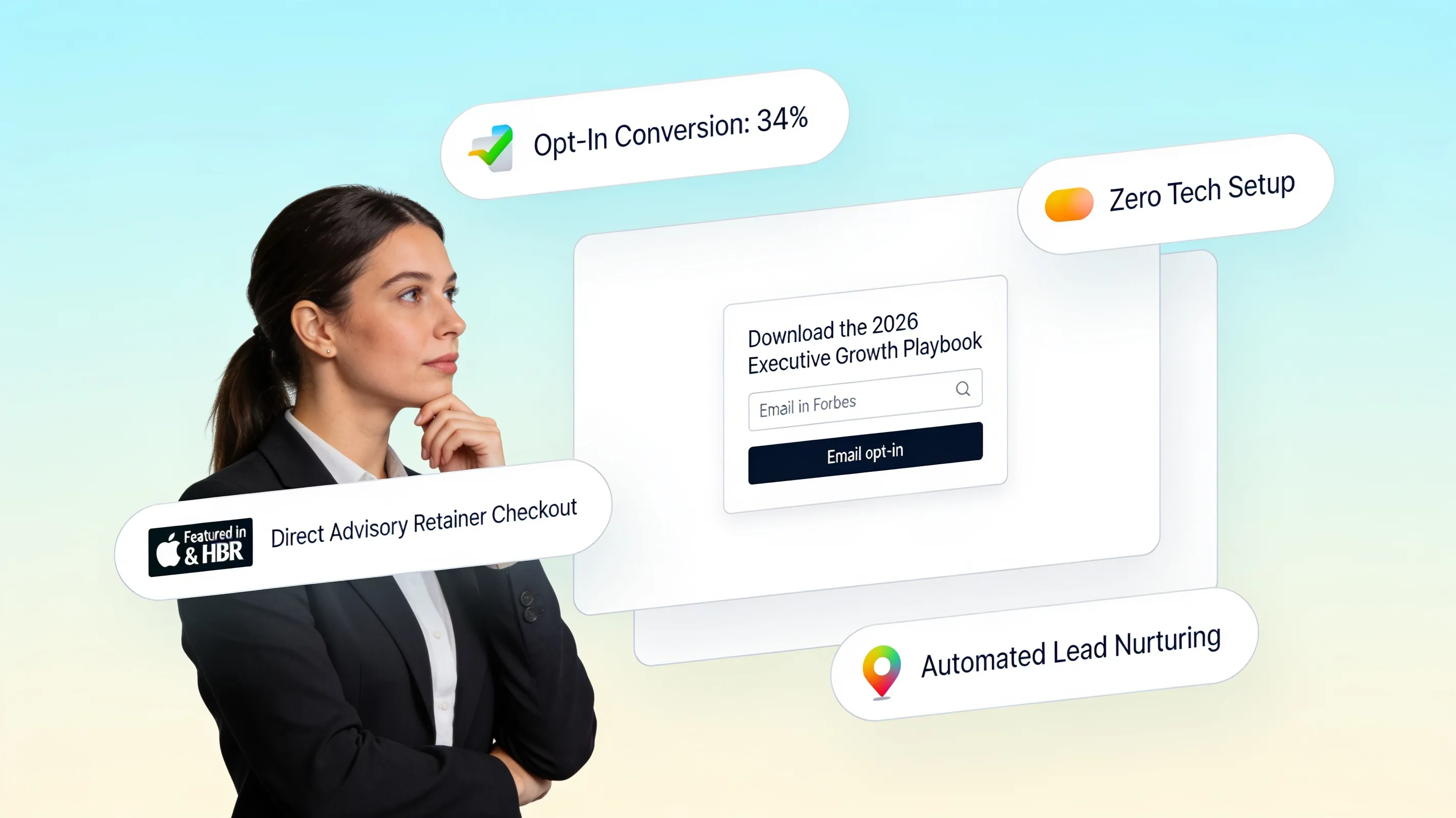
Before asking a prospect to fill out a form or part with hard-earned money, you must answer their unspoken question: "What exactly do I get, and why is it worth my time?"
Clearly articulate your value proposition:
- The Main Outcome: State the concrete result your service delivers.
- The Specific Audience: Explicitly state who your service is designed for.
- The Differentiator: Highlight what makes your offer superior to local alternatives.
Presenting a clear, compelling offer builds confidence before you ask for a commitment.
8. Remove the Small Obstacles That Make Conversion Feel Like Work
Form friction is a leading cause of abandoned quote requests. Asking for unnecessary personal details creates friction that scares away ready-to-buy prospects.
Reduce friction with these practical optimizations:
- Cut Optional Fields: Reduce intake fields to essential details (Name, Phone, Email, and Service Needed).
- Enable Smart Input Types: Ensure mobile form fields automatically pull up numeric keypads when collecting phone numbers.
- Eliminate Competing Links: Remove header navigation menus and external footer links so visitors stay focused on your primary offer.
Simplifying the user experience removes artificial barriers to conversion. For form setup guidance, read our article on adding lead forms to your website.
9. Give Visitors the Evidence They Need Before They Commit
Skeptical prospects need proof before trusting a new business with their money or contact details.
Incorporate authentic proof markers across your layout:
- • Verified Customer Reviews ➔ Real star ratings and local feedback
- • Licenses & Credentials ➔ Active state contractor badges
- • Clear Guarantees ➔ Upfront, transparent refund/service terms
Adding concrete credibility markers reduces buyer anxiety and increases form submissions (explore credibility techniques in our guide on building website trust).

10. Test One Meaningful Change Instead of Redesigning Everything at Once
When a landing page underperforms, business owners often tear down the entire page and start over. But doing a full redesign makes it impossible to know which specific change actually fixed or hurt your conversion rate.
Follow a structured A/B testing approach:
- Form a Single Hypothesis: Test a specific element (e.g., "Replacing our generic headline with a time-sensitive promise will increase quote submissions").
- Isolate the Variable: Change only the headline, keeping all images, form fields, and colors identical.
- Run Until Statistically Valid: Allow enough visitor traffic to flow through both variants before declaring a winner.
Testing one element at a time yields clear data on what drives your conversions.
11. Measure the Conversions That Matter to Revenue, Not Just the Ones That Look Good
A landing page that generates 100 low-quality leads who never buy is far less valuable than a page that generates 20 highly qualified leads who convert into high-paying clients.
Track downstream business value:
- Lead-to-Customer Rate: What percentage of form submissions actually sign a contract or pay an invoice?
- Cost Per Acquisition (CPA): How much ad spend is required to acquire a paying client, not just a raw lead?
Tracking metrics tied directly to revenue ensures your optimization efforts drive actual business growth. For more on turning visitors into customers, read our guide on turning website visitors into customers.
12. Build and Improve Landing Pages Without Development Bottlenecks
Constantly testing new headline hooks, updating offer details, and building customized landing pages shouldn't require hiring an expensive agency or waiting on busy developers.
Using a modern platform like BoltWeb gives you complete operational control. You can generate custom layouts in seconds, update form fields on the fly, and deploy search-optimized landing pages that turn casual visitors into loyal, paying clients.
12 High-Converting FAQs: Landing Page Conversion Rates Explained
1. What is a landing page conversion rate, and why is my current page failing to get results?
Here’s the plain truth:
Your landing page conversion rate is the percentage of total unique visitors who complete your primary business goal—whether that's calling your office, requesting a estimate, or buying a product online. If 1,000 people visit your page and 980 leave without taking action, your page suffers from a 98% drop-off rate. That happens when pages suffer from vague messaging, hidden call-to-action buttons, or slow mobile loading times. Instead of spending weeks wrestling with web design agencies, using BoltWeb solves this instantly. BoltWeb acts as a complete done-for-you solution—automatically writing high-converting sales copy, structuring visual layouts, and publishing lead-ready pages in seconds.
2. How do I calculate my landing page conversion rate accurately?
You can calculate your conversion performance using this standard equation:
For example, if your service landing page receives 800 unique visitors this month and generates 40 form submissions, your calculation looks like this:
Measuring this metric regularly gives you an objective baseline to track ongoing page improvements.
3. What is considered a good landing page conversion rate for my industry?
A common question business owners ask is: "Is my 4% conversion rate good, or am I losing money?"
Typical conversion rate benchmarks vary significantly based on buyer intent, industry type, and offer structure:
- Local Home Services (Emergency Repairs): 8.0% – 15.0%+
- Professional B2B Services: 3.0% – 7.0%
- E-Commerce & Retail Products: 2.0% – 4.5%
- High-Ticket Consulting & Courses: 1.5% – 4.0%
Rather than comparing yourself to generic internet averages, your true goal is establishing a solid baseline and systematically optimizing your offer over time.
4. What micro-conversions should I track alongside primary leads?
Not every action on your page leads to an immediate sale, but secondary engagement signals help pinpoint visitor interest:
- Primary Macro-Conversions: Completed quote requests, inbound smartphone calls, and direct order checkouts.
- Secondary Micro-Conversions: Video play button clicks, PDF brochure downloads, and scrolling past 75% of your page content.
Tracking both levels of interaction reveals whether visitors are engaging with your message before making a buying decision.
5. Why are interested visitors dropping off before submitting a lead form?
When visitors arrive on your page, scroll through your content, and leave without converting, they usually encounter one of three major conversion friction points:
- Form Fatigue: Asking for too many required fields (like fax numbers or street addresses) scares off ready-to-buy prospects.
- Weak Trust Cues: Missing customer reviews, missing license badges, or generic stock imagery creates buyer doubt.
- Mobile Layout Distortion: Buttons that fall off the screen or text that overlaps on mobile viewports causes immediate bounces.
Fixing these small friction points turns unexplained drop-offs into consistent customer inquiries.
6. How does headline message match impact my landing page performance?
Imagine clicking a search ad that promises "24/7 Emergency Plumber in Dallas," only to land on a page whose primary headline reads "Welcome to Quality Sanitation Services."
A psychological disconnect occurs instantly.
When your page headline fails to mirror the exact promise, offer, or search term that brought the visitor to your page, bounce rates surge. Aligning your main title directly with your visitor's initial search query assures them they landed in the right place. Learn more in our guide on how to write a landing page headline.
7. How can I make my value proposition clear before asking for a click?
Before asking a prospect for their contact details, your copy must answer their unstated question: "What makes your service worth my time and money?"
Your value proposition should communicate three things immediately:
- The Concrete Result: State the exact outcome your service provides.
- Target Audience Fit: Explicitly name who your service is designed for.
- The Unique Advantage: Highlight what sets your service apart from local alternatives.
Communicating clear benefits upfront builds confidence before you present your primary call-to-action.
8. What small obstacles cause form abandonment on mobile landing pages?
Mobile users operate under time constraints and smaller screen viewports.
Common design flaws that hurt mobile conversion rates include:
- Tiny buttons that are difficult to tap accurately with a thumb.
- Input fields that fail to automatically trigger appropriate mobile keypads (such as pulling up a dialer for phone numbers).
- Cluttered header navigation menus that distract visitors from your primary offer.
Eliminating these interaction barriers keeps mobile prospects moving smoothly toward form completion.
9. What proof signals do I need to include to overcome buyer skepticism?
Skeptical prospects need concrete evidence before trusting a new business with their money or personal details.
Incorporate verified social proof markers directly into your design:
- Verified Reviews: Feature authentic customer star ratings and feedback.
- Credentials & Badges: Display official state licenses, trade certifications, and insurance verification.
- Real Work Photos: Replace generic stock photos with authentic pictures of your team, vehicles, and completed projects.
Adding visible credibility markers reduces buyer anxiety and increases lead generation. For more on this topic, read our guide on adding social proof to your website.
10. How do I test landing page improvements without breaking my design?
When a landing page underperforms, tearing down the entire page makes it impossible to isolate what actually worked.
Follow a structured split-testing framework:
- Formulate One Clear Hypothesis: Test a single element—such as changing a generic headline to a time-sensitive promise.
- Isolate Your Variable: Keep all background images, form inputs, and color schemes identical across both versions.
- Track Conversion Outcomes: Measure actual lead form submissions rather than superficial metrics like scroll depth.
Testing one element at a time yields clear performance data on what drives your results.
11. How do I measure lead quality instead of just tracking raw sign-ups?
A landing page that generates 100 low-quality inquiries that never convert into paying customers is far less valuable than a page that brings in 20 high-intent leads.
Evaluate these revenue-focused metrics:
- Lead-to-Sale Conversion Rate: What percentage of form submissions sign contracts or pay invoices?
- Customer Acquisition Cost (CAC): How much marketing spend is required to gain a paying client?
Tracking downstream business metrics ensures your optimization efforts generate real revenue rather than vanity metrics.
12. How can I build high-converting landing pages without waiting on web developers?
Constantly updating offer details, testing new headlines, and building dedicated campaign pages shouldn't require hiring an expensive agency or waiting weeks for developers.
That is why smart founders rely on BoltWeb. As a complete done-for-you AI website generator, BoltWeb handles the entire creation process for you. Simply describe your business in plain language, and BoltWeb instantly writes persuasive copy, builds mobile-responsive layouts, and deploys high-converting landing pages—giving you a lead-generating storefront in under 60 seconds.