When a first-time visitor opens your link, their brain runs an automatic risk assessment within milliseconds. They have never spoken to your team, stepped into your office, or verified your claims, so their immediate impulse is self-preservation. Online buyers rarely leave a page because an offer lacks quality; they leave because they feel an uncomfortable sting of uncertainty.
Understanding how to build trust with your website comes down to lowering cognitive friction and making safety the default path. If your page feels unpredictable, visitors experience cognitive dissonance, close the tab, and seek refuge with a competitor they already know. Learning how to build trust online requires systematically removing doubt using three structural pillars: proof of human identity, verified performance outcomes, and transparent pricing policies.
When your page delivers on all three fronts, you eliminate hesitation and make buying feel like the only logical next step. If you are starting completely from scratch, explore our step-by-step guide on how to build a website from scratch to lay down a solid foundation.

THE THREE PILLARS OF WEBSITE TRUST
│
▼
[ IDENTITY PROOF ]
Real People & Location
Eliminates Anonymity
[ VERIFIED PERFORMANCE ]
Reviews & Case Studies
Shows Proven Outcomes
[ RISK REDUCTION ]
Clear Prices & Policies
Removes Hidden Surprises
Make It Clear Who Is Behind the Business
Here is the brutal truth about faceless companies: anonymity breeds suspicion. When a site hides behind vague corporate buzzwords and a generic form, prospective buyers assume the worst. They want to know who is taking their money and who will stand behind the work if something goes wrong.
[ ANONYMOUS CORPORATE COPY (WEAK) ]
"We are a leading global provider of synergistic enterprise solutions."
──► Vague, hides ownership
[ HUMAN-CENTERED ABOUT COPY (STRONG) ]
"Founded in 2018 by Marcus Vance, our team of 8 technicians serves Austin."
──► Named founder, local accountability
Using the Voice of Customer framework, you can transform a cold About Us page into an anchor of credibility by pulling the curtain back on your real operations:
- Show authentic faces: Display sharp, real photos of the founder, key leaders, or actual field crew.
- Tell a grounded origin story: Explain why you started the business and the specific problem you set out to solve.
- Publish physical proof: Feature your actual physical business address and direct local phone number directly on the page.
Showing real people creates immediate rapport and establishes human accountability. If you are building without a dedicated creative team, learn how to build a website without a designer while maintaining an authentic human touch.

Show Visitors Exactly What Your Business Does
Picture this: a customer lands on your page, scans for five seconds, and still cannot figure out what you sell. When website messaging relies on abstract industry jargon, cognitive load skyrockets, frustration sets in, and prospective buyers leave instantly.
CLEAR OFFER ARCHITECTURE
[DIRECT HEADLINE]
On-Site Commercial HVAC Repair for Chicago Warehouses
[SUPPORTING EXPLANATION]
We fix industrial heating and cooling systems same-day so your facility stays compliant and operational.
[ HIGH-CONTRAST ACTION BUTTON ]
[ Request an Immediate Dispatch ]
Using the Jobs-to-Be-Done methodology, format your homepage copy to answer three immediate questions:
- Plain language offer: State the exact service you provide without complex terminology.
- Specific geographic market: Specify the exact city, region, or customer group you serve.
- Concrete problem solved: Describe the painful situation you eliminate so visitors recognize their needs inside your words.
Clear messaging respects the reader’s time and converts curiosity into action. For deeper strategies on structuring your message, read our complete breakdown on how to choose what your website should say.

Use Real Photos Instead of Generic Stock Images
Think about the last time you saw a stock photo of models in suits sharing a fake handshake. Did it make you trust the company? Modern buyers spot artificial stock imagery instantly, and it triggers an immediate skepticism flag across your entire offer.
Replacing stock art with authentic website images transforms your domain into a grounded, tangible business:
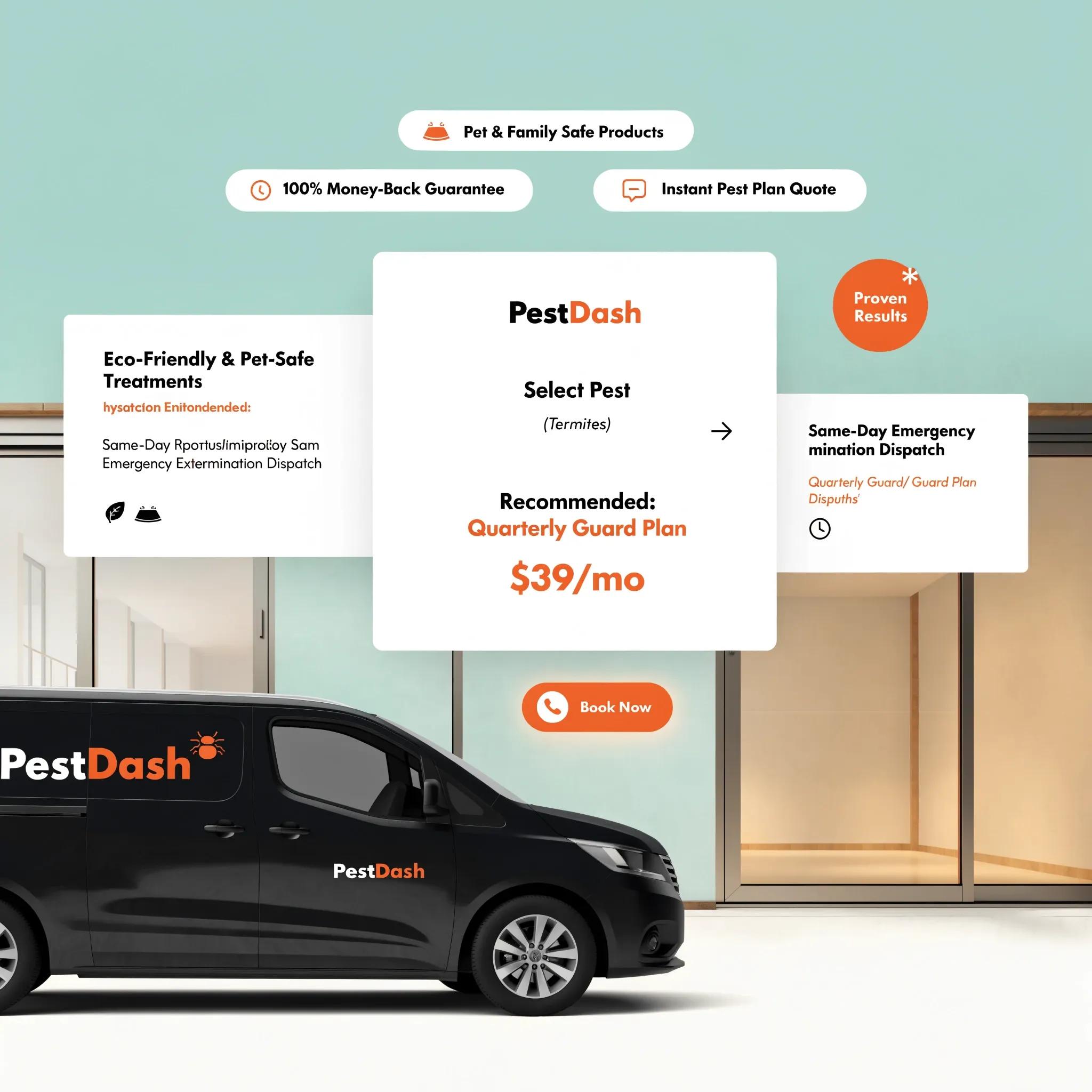
- Real operational equipment: Show branded work vans, real tools, physical storefronts, or actual office space.
- Team members in action: Feature candid photographs of technicians, creators, or support staff working on actual jobs.
- Unedited product proof: Display high-definition photos or real software walkthroughs instead of polished 3D concepts.
Grounding your site in authentic visual assets gives your brand undeniable legitimacy and supports a professional website design. For practical advice on gathering visual assets, review our guide on how to choose images for your website.

Show Real Customer Reviews and Testimonials
Cold visitors rarely take a founder's word at face value—they want peer verification before opening their wallets. Displaying authentic customer reviews and verified testimonials provides the social proof required to neutralize buyer hesitation.
SOCIAL PROOF HIERARCHY
│
▼
[ THIRD-PARTY REVIEWS ]
Embedded Google/Trustpilot
[ FULL NAME & PHOTO ]
Real client avatar & title
[ VERIFIED LOGOS ]
Recognizable client brands
To maximize the impact of your trust signals:
- Embed third-party widgets: Stream live ratings directly from Google Business, Trustpilot, or G2 so visitors know reviews cannot be altered internally.
- Include full client details: Pair quotes with the reviewer’s full name, job title, company, and headshot.
- Place proof near action points: Position review snippets directly beside quote forms and checkout buttons.
Discover step-by-step implementation methods in our detailed guides on how to add social proof to a website and how to add testimonials to a website.

Show Your Work Instead of Just Saying You're Good
Promising exceptional results is simple; proving them requires hard evidence. A comprehensive website portfolio or structured case studies section transforms claims into verified facts by displaying clear examples of work.
CASE STUDY FRAMEWORK (PAS)
│
▼
[ PROBLEM ]
"Client had a leaking commercial roof."
[ ACTION ]
"Replaced damaged flashing in 24 hours."
[ OUTCOME ]
"Zero leaks in 2 years, saved $14,000 in repairs."
Apply the Problem-Agitate-Solve framework to make your past work compelling:
- Initial challenge: Detail the exact bottleneck or crisis the customer faced before hiring you.
- Direct intervention: Explain the specific steps, tools, and processes your team deployed to solve it.
- Measurable outcome: Highlight clear metrics, completion times, or side-by-side before-and-after photos.
Proving your track record gives prospects the confidence to reach out. Follow our walkthrough on building a portfolio site or evaluate the best portfolio website builder options available today.

Make Your Contact Information Easy to Find
Nothing destroys confidence faster than a business that buries its contact information. If a visitor has to hunt through fine print just to find an email address, they naturally assume customer support will vanish after they pay.
[ HIDDEN CONTACT (WEAK) ]
[ Generic Web Form Only ]
──► Creates doubt, feels slow
[ ACCESSIBLE CONTACT (STRONG) ]
[ Direct Phone + Email + Address ]
──► Immediate accountability & access
Build trust by making your business contact information effortless to locate:
- Place a phone number and email address directly in your header navigation bar.
- Feature an interactive map showing your physical headquarters or local service area.
- Include response time guarantees near your contact form (e.g., "We reply within 2 business hours").
Making your contact page easy to find converts interest into inquiries. For conversion tips, explore our guides on how to add a lead form to a website and how to get more calls from your website.

Be Honest About Pricing, Policies, and What Customers Get
Hidden fees, surprise add-ons, and hard-to-find return policies trigger instant buyer resistance. Providing transparent pricing demonstrates respect for your audience’s budget and time.
TRANSPARENT POLICY CHECKLIST
- ✔ Clear Upfront Rates or Tiered Estimators
- ✔ Plain-Language Cancellation & Refund Terms
- ✔ Step-by-Step Deliverable Timeline Breakdown
- ✔ Explicit Scope Boundary Explanations
Publishing clear website pricing on a dedicated pricing page builds buyer confidence:
- Share starting rates, baseline package tiers, or interactive project cost calculators.
- Provide straightforward refund, cancellation, and revision rules inside your website policies.
- Outline exact deliverable schedules and project milestones step-by-step.
Being explicit about money weeds out unqualified leads while reassuring serious buyers. If you deliver professional services, see our guide on how to sell services from a website.

Make Your Website Look Professional Without Making It Feel Fake
A professional business website strikes a balance between clean design and authentic character. Overly aggressive popups, auto-playing videos, and flashing discount banners make a site feel spammy and suspicious.
BALANCED DESIGN VISUAL LAYOUT
│
▼
[ BALANCED TYPOGRAPHY ]
2 Legible Font Families
16px+ Body Text Size
[ AMPLE WHITE SPACE ]
Clean Section Margins
Uncluttered Reading Path
[ CONSISTENT BRANDING ]
Matching Color Scheme
Strategic Accent Colors
Adhering to essential website design standards keeps your presentation clean:
- Maintain generous white space between sections so text remains easy to digest.
- Stick to a primary brand color with a high-contrast accent color for action buttons.
- Ensure consistent font sizes, button shapes, and alignment across every sub-page.
A clean layout keeps the reader focused on your offer. Review core usability principles in how to make a website easy to use and avoid high-bounce mistakes by checking common website design mistakes.
Keep Your Website Secure, Updated, and Working
Technical glitches, broken links, outdated copyright years, and browser security warnings destroy website credibility instantly.
TECHNICAL SECURITY BASICS
│
▼
[ HTTPS / SSL ]
Padlock Icon in Browser
[ CURRENT FOOTER ]
Active Year Copyright Stamp
[ FAST PAGE LOAD ]
Under 2-Second Render
Maintain rigorous technical standards for website security:
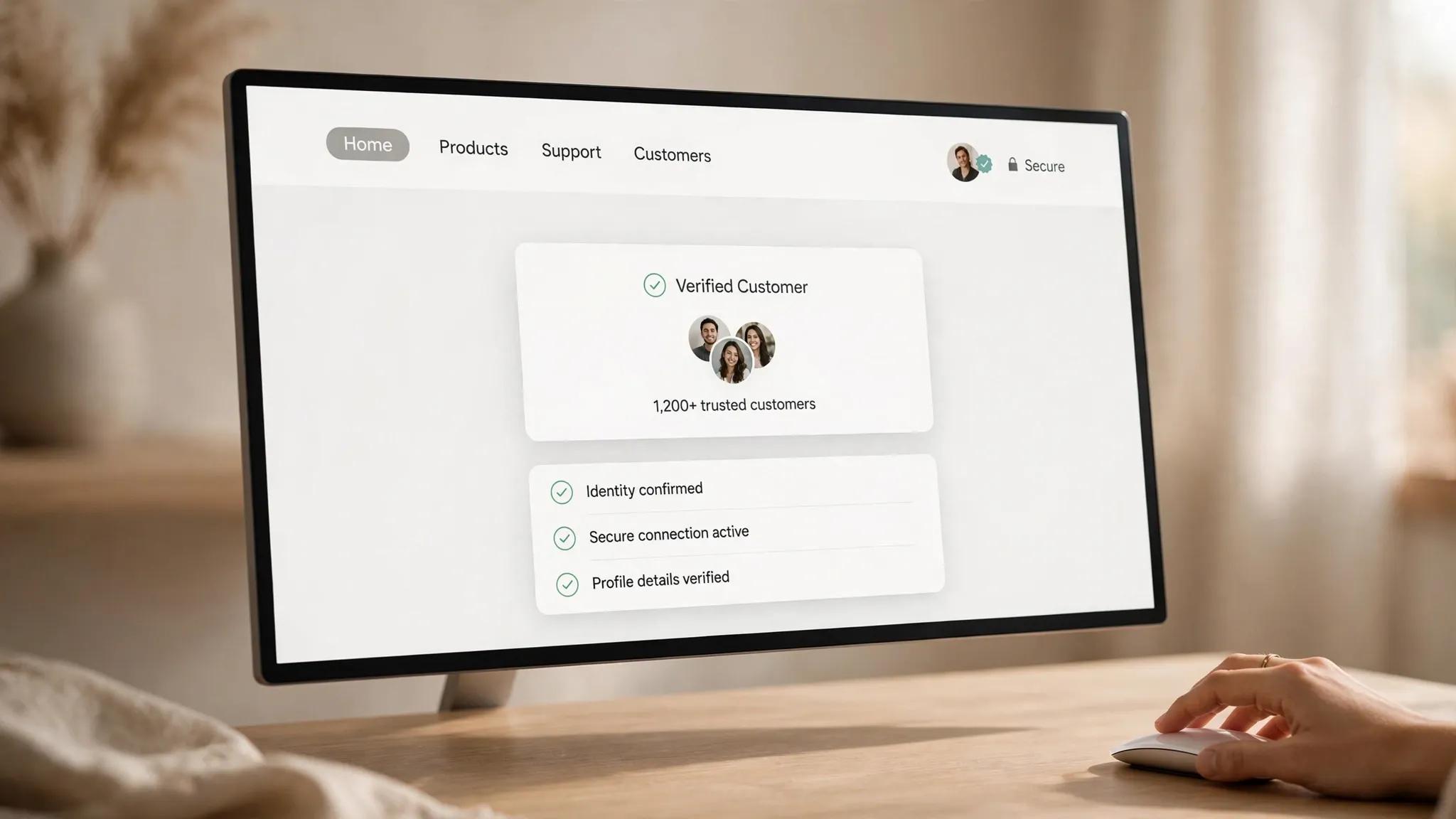
- Install an active SSL certificate so your secure website uses HTTPS with a browser padlock icon.
- Ensure your website footer copyright year updates automatically through routine website maintenance.
- Fix broken outbound links and eliminate 404 errors across all service routes.
- Keep your legal pages, like your privacy policy and terms of service, easily accessible in your footer.
Maintaining site health protects your visitors and keeps your search rankings strong. Follow our guides on how to add SSL to a website and how to make a website load faster.

Test Your Website From a Customer's Point of View
Before launching or updating your layout, step back and evaluate your page through a comprehensive website trust checklist to ensure strong website usability.
| Trust Verification Area | Core Evaluation Question |
|---|---|
| Identity Verification | Is the real business name, physical address, and phone number visible? |
| Headline Clarity | Can a visitor explain what you do within 5 seconds of landing? |
| Visual Authenticity | Are all primary images real photos of your team, products, or work? |
| Social Proof Quality | Are customer reviews paired with full names, photos, or external badges? |
| Policy Transparency | Are pricing tiers, return rules, and shipping policies explicit? |
| Technical Safety | Is the site secured with HTTPS and loading in under 3 seconds? |
Satisfying every evaluation criteria ensures your site is ready to convert cold traffic into clients. Run through our full website launch checklist before going live.

Build a Trustworthy Website Without Making It Complicated
Establishing online credibility shouldn't require hiring an expensive agency or writing thousands of lines of custom code.
With BoltWeb, you can launch an authentic, high-converting digital presence using our intelligent AI website builder.
BOLTWEB TRUST ARCHITECTURE
│
▼
[ AUTOMATED TRUST BLOCKS ]
Reviews & Testimonials
Team Showcase Grids
[ BUILT-IN SECURITY ]
Free SSL Certificates
Automated Footer Dates
[ NATIVE MOBILE SCALING ]
Auto-Responsive Layouts
Ultra-Fast Cloud Hosting
Why growing businesses rely on our business website builder:
- Pre-structured credibility layouts: Instantly deploy pages configured with review widgets, team showcase blocks, case study grids, and clear contact structures using our professional website builder.
- Automated technical security: Every domain published on our easy website builder includes free SSL encryption, automated security patches, and instant page speed optimizations out of the box.
- Simple visual editing: Update photos, revise copy, and publish transparent pricing tables effortlessly without touching code using our business website creator.
- Mobile-optimized experience: Your entire site automatically scales across smartphone and tablet viewports when using our small business website builder.
Stop letting doubt cost you valuable sales. Explore how our platform stacks up against traditional options in our BoltWeb vs WordPress and BoltWeb vs Wix guides, or get started directly on BoltWeb today.

Frequently Asked Questions
How long does a website have to make a convincing first impression on a new visitor?
Visitors form a definitive impression of your website in under 50 milliseconds, with full mental judgments settling within three to five seconds. During this initial micro-window, the human brain isn't carefully reading your value proposition; it is subconsciously evaluating design balance, visual clarity, color harmony, and layout structure. If your site looks cluttered, visually outdated, or chaotic, visitors experience immediate cognitive friction that triggers a strong instinct to bounce. Once an initial negative impression forms, no amount of persuasive copywriting can easily restore credibility, making clean visual hierarchy the absolute prerequisite for building trust.
Why do generic stock photos actively harm a company's conversion rates?
Generic stock photos—such as overly polished corporate models giving artificial handshakes or wearing staged headsets—signal dishonesty to modern consumers who are hyper-attuned to marketing polish. When prospects recognize a stock image, their brain registers that you are masking your real operational reality, which immediately prompts them to ask what else you might be hiding. Replacing stock art with candid, high-definition photographs of your actual team, real physical tools, customer locations, or authentic behind-the-scenes processes removes anonymity, establishes human accountability, and grounds your brand in reality.
What specific contact information must be visible to prove a business is legitimate?
A genuinely trustworthy business never buries its identity or forces prospective clients into a mysterious, one-way communication channel. To establish undisputed legitimacy, your website must feature a verified physical address, a local or direct telephone number, an official corporate email address, and clear operational hours directly within the header, footer, or dedicated contact area. Omitting physical location details or relying exclusively on an unverified contact form creates immediate suspicion, as prospective buyers naturally assume that getting post-purchase support will be difficult or impossible.
How can small businesses display social proof if they don't have well-known client logos?
Small or early-stage businesses can generate powerful social proof without relying on famous enterprise logos by focusing on detailed micro-case studies, verified third-party reviews, and outcome-oriented customer feedback. Embedding live review streams from external, non-bias platforms like Google Business Profile or Trustpilot proves that your ratings cannot be tampered with or fabricated internally. Pairing brief quotes with full client names, real headshots, verified locations, and explicit, quantitative metrics—such as specific time saved or money earned—creates undeniable social evidence that resonates far more deeply than an anonymous brand emblem.
How does website speed impact visitor trust and brand credibility?
Page speed is fundamentally interpreted by site visitors as an indicator of your company's operational competence and respect for their time. When a website takes longer than two to three seconds to load, visitors don't just get impatient—they begin to question the reliability, technical infrastructure, and security of the entire business behind it. Severe latency creates a subtle perception of neglect, leading users to assume that your actual service delivery will be equally sluggish, sloppy, or unorganized.
What technical security signals do modern web browsers require to show a site is safe?
Modern web browsers strictly enforce security baselines by flagging non-encrypted websites with prominent warning labels like "Not Secure" directly inside the URL address bar. Securing an active SSL certificate to serve your domain over HTTPS is the baseline technical requirement for proving data privacy and encryption. Beyond the fundamental padlock icon, maintaining clean, error-free site routing, keeping your copyright dates current, displaying transparent privacy policies, and avoiding intrusive, spam-like popups reinforce to visitors that their personal and financial data remains protected.
Should a business publish exact pricing or hide rates to force consultation calls?
Hiding pricing behind aggressive "Contact Us for a Quote" walls often creates immediate buying resistance, as modern consumers equate hidden rates with surprise fees, high-pressure sales tactics, or unpredictable billing practices. While customized enterprise services may not fit into a flat fee structure, providing transparent starting rates, baseline pricing tiers, or interactive cost estimators respects the buyer's evaluation process. Disclosing cost boundaries upfront filters out unqualified leads while reassuring serious prospects that your business operates with complete financial fairness and operational transparency.
How does clear, jargon-free copywriting influence customer confidence?
When website copy relies heavily on vague corporate buzzwords, complex technical jargon, or hyper-inflated marketing claims, prospective buyers struggle to grasp what you actually sell. This intellectual confusion increases cognitive load, forcing visitors to expend mental effort just to decipher your offer, which quickly transforms into frustration and skepticism. Using plain, conversational language anchored in the real-world problems you solve demonstrates genuine expertise, makes your offer instantly accessible, and builds rapid rapport with first-time visitors.
What role does an About Us page play in dismantling client hesitation?
The About Us page is frequently one of the highest-trafficked secondary pages on a commercial website because prospective clients turn to it specifically to answer a critical question: Who am I actually giving my money to? A great About Us page moves past abstract corporate boilerplate to tell an authentic origin story, highlight the real human founders, showcase field technicians or support personnel, and state core operational values. Revealing the real human beings accountable for the company's work dismantles anonymity and builds strong interpersonal trust before a sales conversation even begins.
Why are hidden fees and vague return policies so destructive to online conversions?
Hidden fees, ambiguous return guidelines, and buried subscription terms destroy brand credibility because they directly threaten a buyer's financial safety. When a buyer discovers unexpected charges at checkout or struggles to find straightforward cancellation policies, they feel tricked, which permanently kills their intent to purchase. Publishing plain-language refund terms, clear deliverable timelines, and explicit scope boundaries eliminates buyers' fear of hidden catches, empowering them to complete transactions with total peace of mind.
How can a business prove its technical competence through portfolio presentation?
Proving technical competence requires moving beyond simple, polished photo galleries to showcase a clear analytical framework behind past work. Applying a structured Problem-Agitate-Solve structure within your portfolio allows you to document the exact starting constraints, the technical interventions your team engineered, and the verifiable final outcomes achieved for previous clients. Presenting clear before-and-after comparisons alongside quantitative data points proves that your past success was driven by repeatable expertise rather than random luck.
How can non-technical business owners build a credible website without coding?
Building an authentic, trustworthy website no longer requires hiring an expensive development agency or writing thousands of lines of custom code. Modern AI website builders like BoltWeb empower business owners to launch high-converting, professional sites equipped with pre-built trust layouts—such as review widgets, team grids, transparent pricing tables, and verified portfolio showcases. With automated SSL security, mobile-responsive layouts, and lightning-fast cloud hosting built directly into the platform, business owners can establish high credibility without technical complexity.