When business owners decide to launch a digital storefront, they inevitably run into a confusing technical debate: hosted vs self-hosted website setups.
Standard hosting advice often pushes technical jargon, forcing non-technical founders down a rabbit hole of server configurations, database maintenance, and security patches. But marketing hype hides a simple truth: if you choose the wrong infrastructure, you either trap yourself in a high-maintenance technical nightmare or end up with a restrictive platform that limits your business growth.
Understanding the difference between a managed, all-in-one platform and a self-hosted environment gives you total clarity over your budget, maintenance workload, and long-term scalability.
Here is the ultimate head-to-head breakdown to help you make the right choice for your business.
Hosted vs Self-Hosted Website: At a Glance
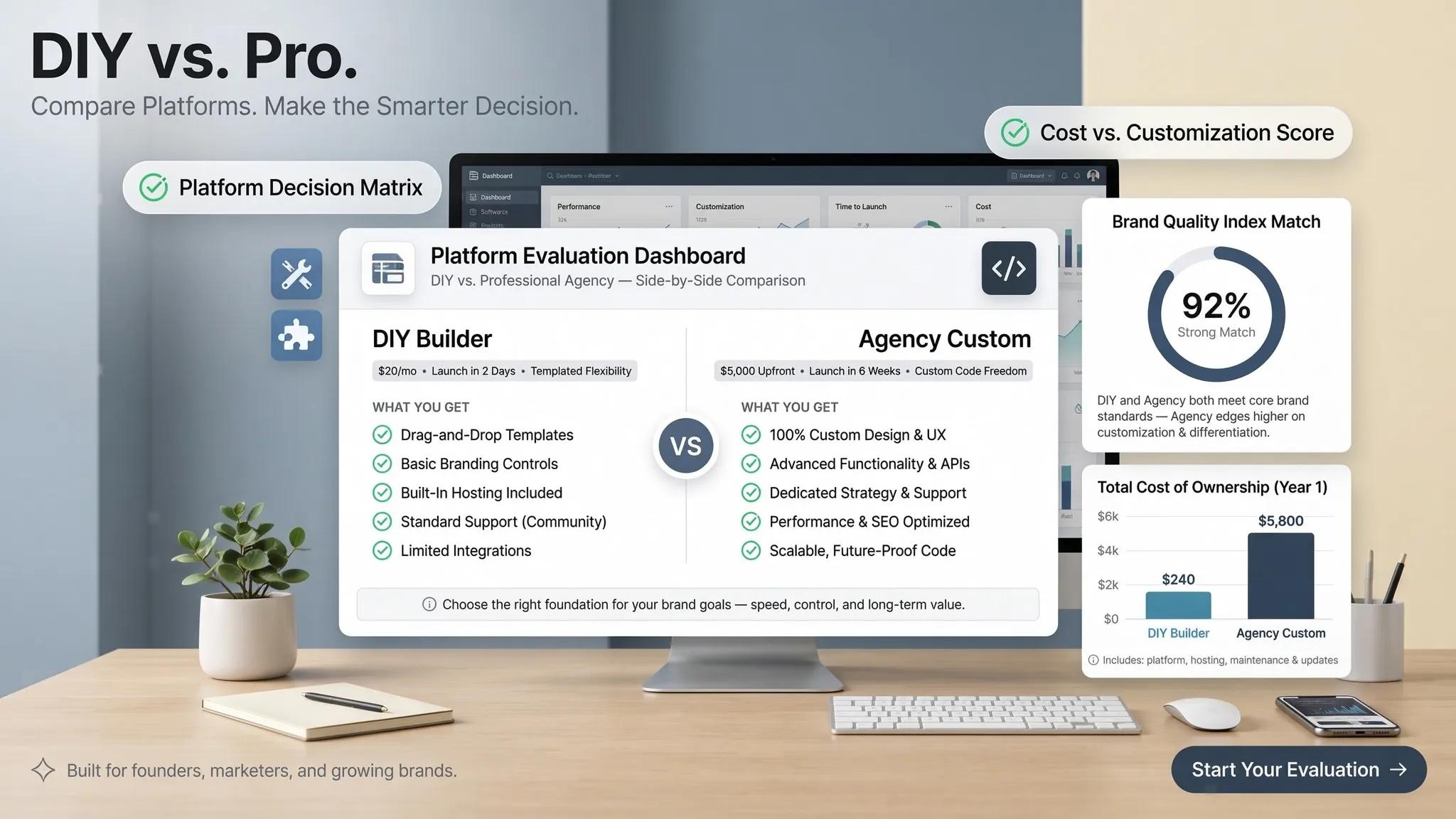
Before diving into the detailed breakdown, review this side-by-side comparison matrix to see how both approaches stack up across key business factors:
| Factor | Hosted Website Platform | Self-Hosted Website |
|---|---|---|
| Initial Setup | Usually simpler, instant template deployment | Often requires manual installation and DNS configuration |
| Infrastructure | Provider manages servers, CDN, and databases | You choose a host and manage server arrangements |
| Software Updates | Handled automatically by the platform | You or your developer handle updates and patches |
| Security | Platform manages infrastructure security | You manage software configuration, SSL, and firewalls |
| Customization | Governed by platform capabilities and visual editors | Unrestricted control over code, database, and server |
| Costs | Predictable, subscription-based pricing | Host fees plus plugins, themes, security, and developer labor |
| SEO Control | Integrated tools, clean metadata, and built-in schema | Full technical control over server headers and rewrite rules |
| Portability | Content export support varies by platform | Files and databases can be migrated to any compatible server |
| Best Fit | Business owners prioritizing speed, convenience, and low overhead | Developers or businesses needing custom backend applications |
1. Hosted vs Self-Hosted Website: What’s the Real Difference?
Stripping away the technical jargon reveals a straightforward distinction between how your site software and server infrastructure operate.
Here’s the deal:
What is a Hosted Website? A hosted platform—such as BoltWeb—combines site design tools, web software, server space, security, and database storage into one unified service. You pay a single subscription fee, and the platform manages the entire technical infrastructure behind the scenes.
What is a Self-Hosted Website? A self-hosted setup separates software from infrastructure. You download open-source software (like WordPress), purchase separate self-hosted website hosting from an independent provider, install the files manually, and manage the server setup yourself.
When comparing a hosted vs self-hosted website, the core question isn't just about where your files live—it's about who takes responsibility when something breaks.
2. Who Manages Your Website After You Publish It?
Deploying your site is only the first step. Day-to-day management determines how much time you spend fixing server errors versus growing your business.
Think about this:
When you run a hosted website vs self-hosted website, routine maintenance responsibilities diverge completely:
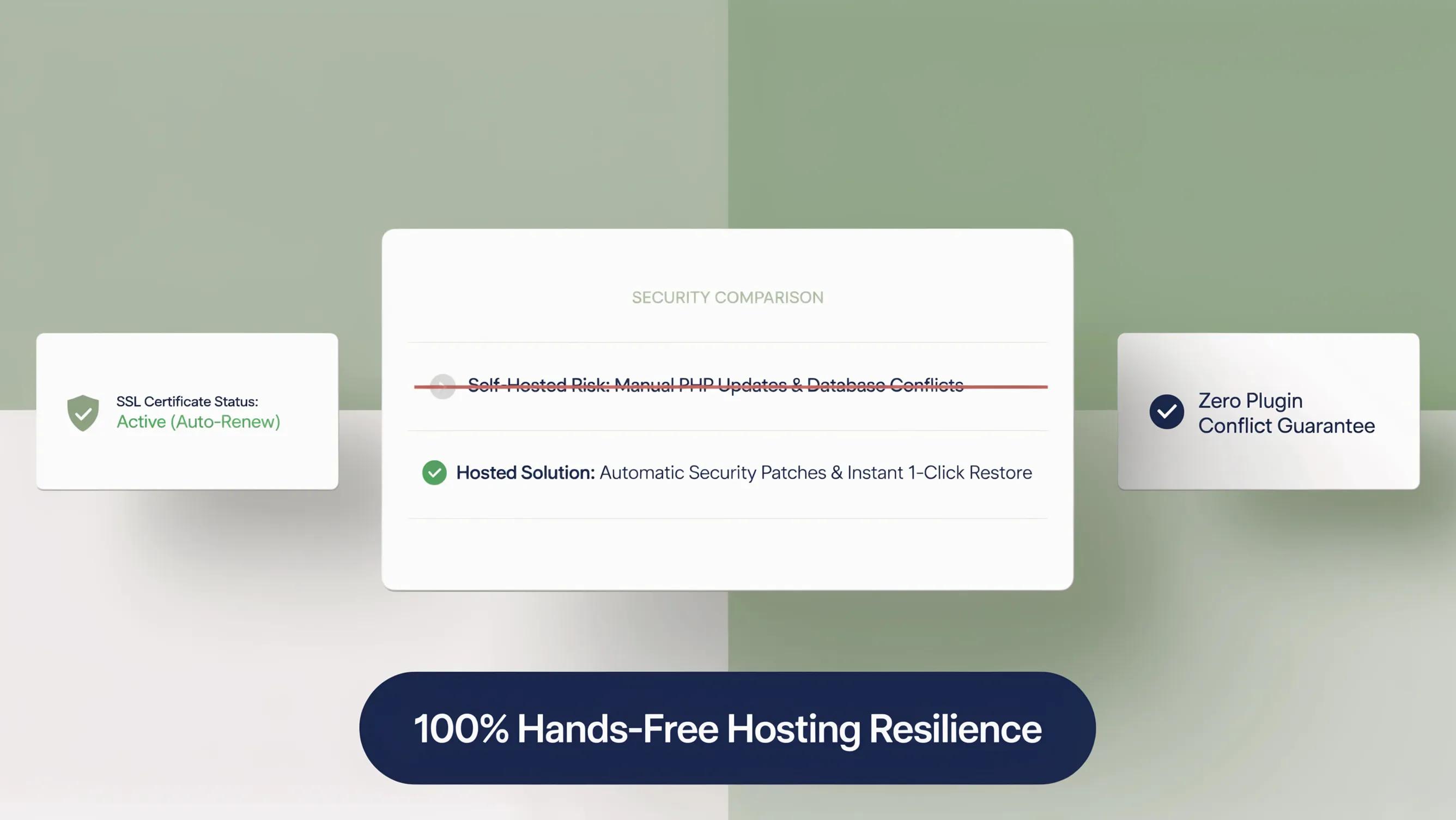
- Hosted Platform Management: Server updates, database optimization, SSL certificate renewals, and security monitoring happen automatically behind the scenes. If a page breaks, centralized support teams resolve the underlying code issue.
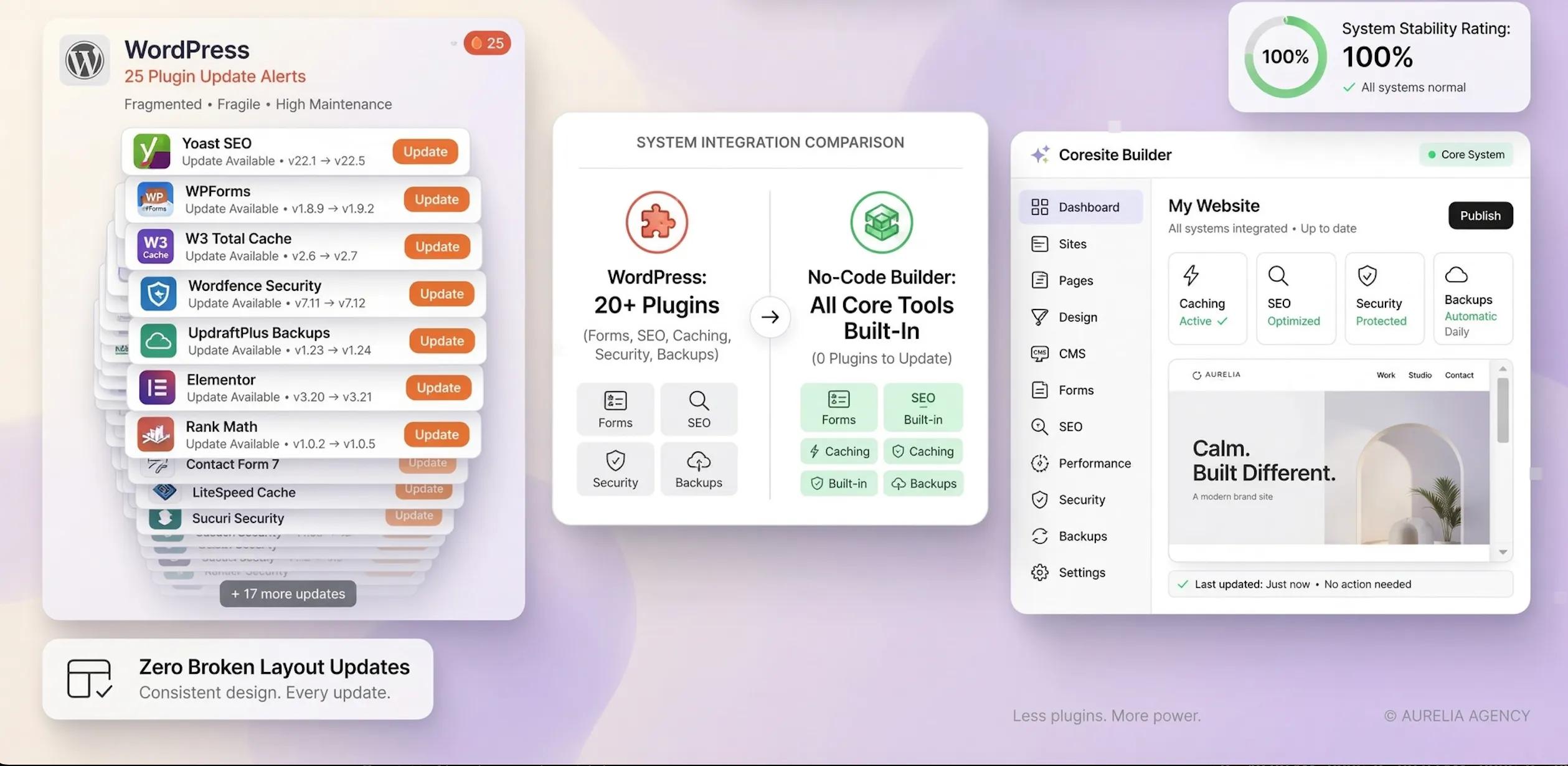
- Self-Hosted Management: You act as the system administrator. You must monitor server uptime, test PHP version updates, apply security patches to core files, and troubleshoot database connection errors when plugins conflict.
Choosing a managed, all-in-one system like an AI website builder for business offloads maintenance overhead so you can focus on driving local sales.
3. Compare the Total Cost Beyond the Hosting Price
Looking only at headline hosting prices creates a dangerous financial illusion. A cheap $4-a-month hosting deal often turns into a expensive proposition once you add necessary operational tools.
Evaluate the true total cost of ownership across both models:
- • Flat Monthly Subscription
- • Included Cloud Hosting
- • Built-in SSL & Security
- • Included Form Processing
- • Base Server Hosting Fee
- • Paid Security & Backup Add-ons
- • Premium Theme & Plugin Fees
- • Developer Maintenance Fees
When calculating hosted vs self-hosted website cost factors, a self-hosted site requires separate budget allocations for premium form builders, caching tools, security firewalls, and developer retainers.
A hosted platform bundles these components into a single predictable fee, protecting your operating margin from surprise maintenance expenses.
4. How Much Control Do You Really Need Over Your Website?
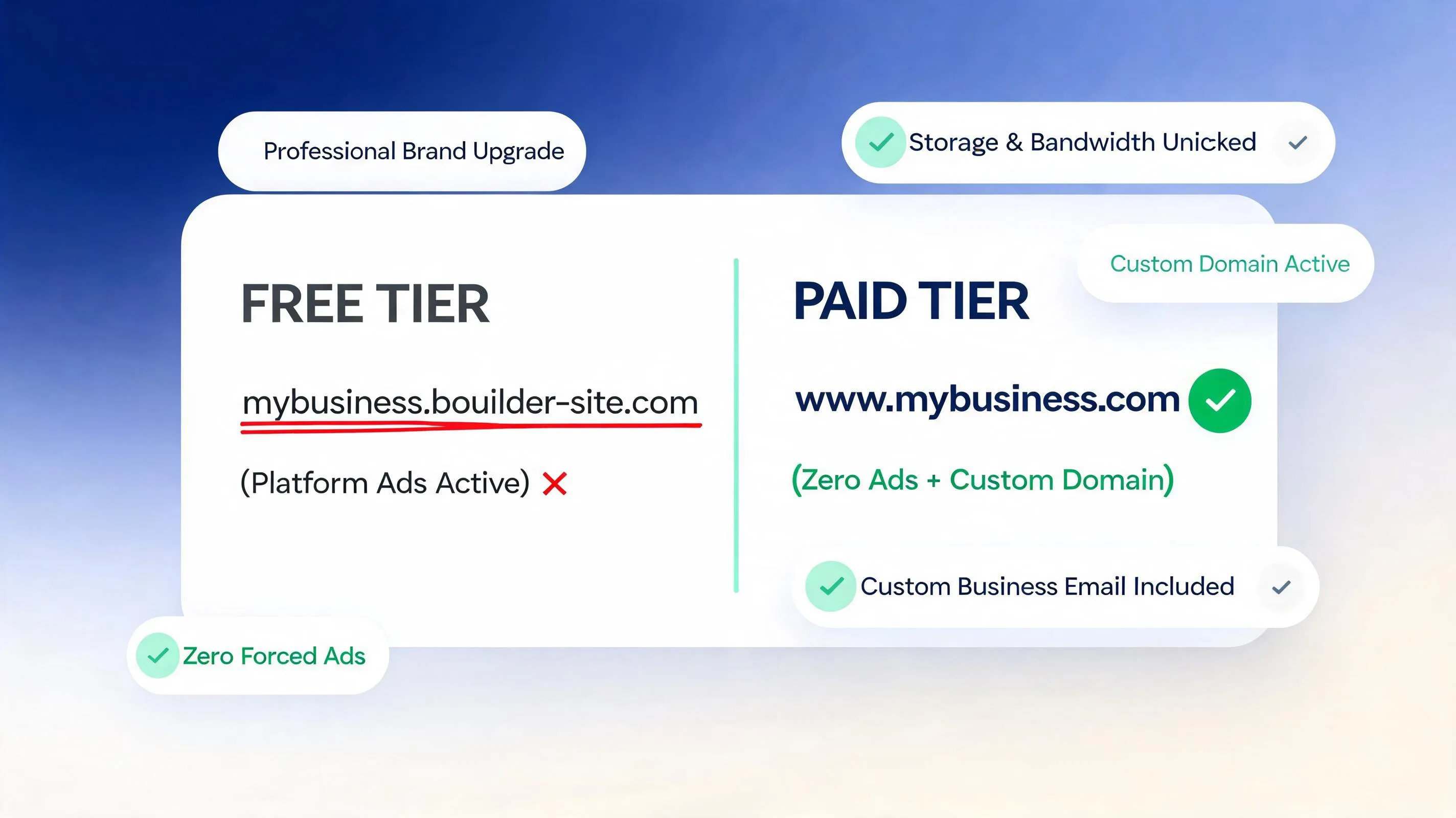
A common argument for self-hosting is "total technical freedom." But do you actually need root server access to run a successful business site?
Assess your functional requirements carefully:
- When You Need Full Server Control: If you are building a custom SaaS application, a complex database portal with proprietary API integrations, or an enterprise marketplace requiring custom server configurations, a self-hosted architecture is necessary.
- When Platform Control Is Superior: For 95% of local service companies, retail shops, and professional practices, total server control is an unnecessary liability. You need an intuitive layout editor, mobile-responsive pages, high-converting lead forms, and reliable search engine indexing.
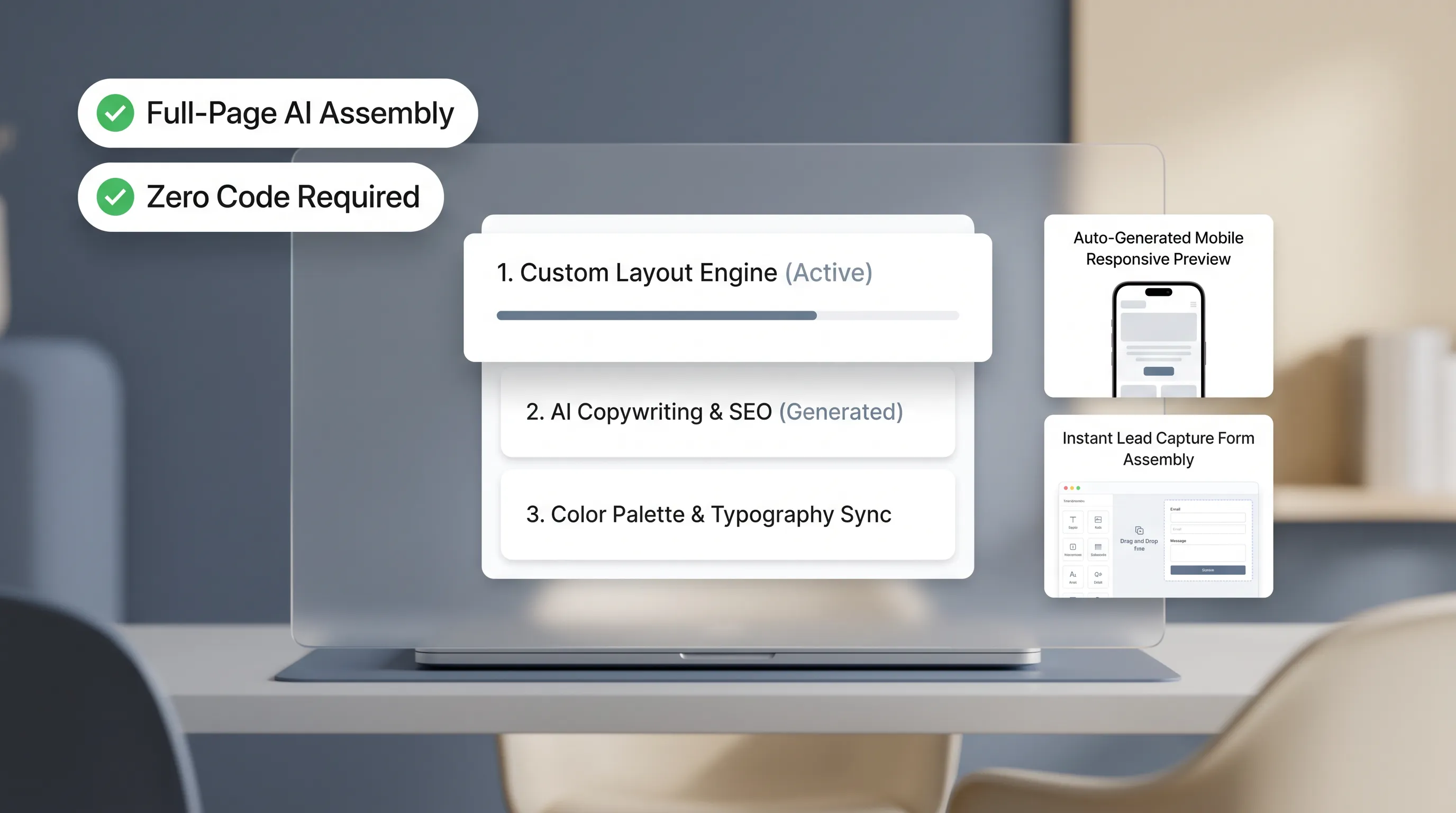
Using a modern drag-and-drop website builder gives you complete visual control over copy, imagery, colors, and layout structure without exposing your infrastructure to accidental code breakage.
5. Which Option Is Easier to Build and Maintain?
If you don't write code or manage servers for a living, usability determines how quickly your website goes live.
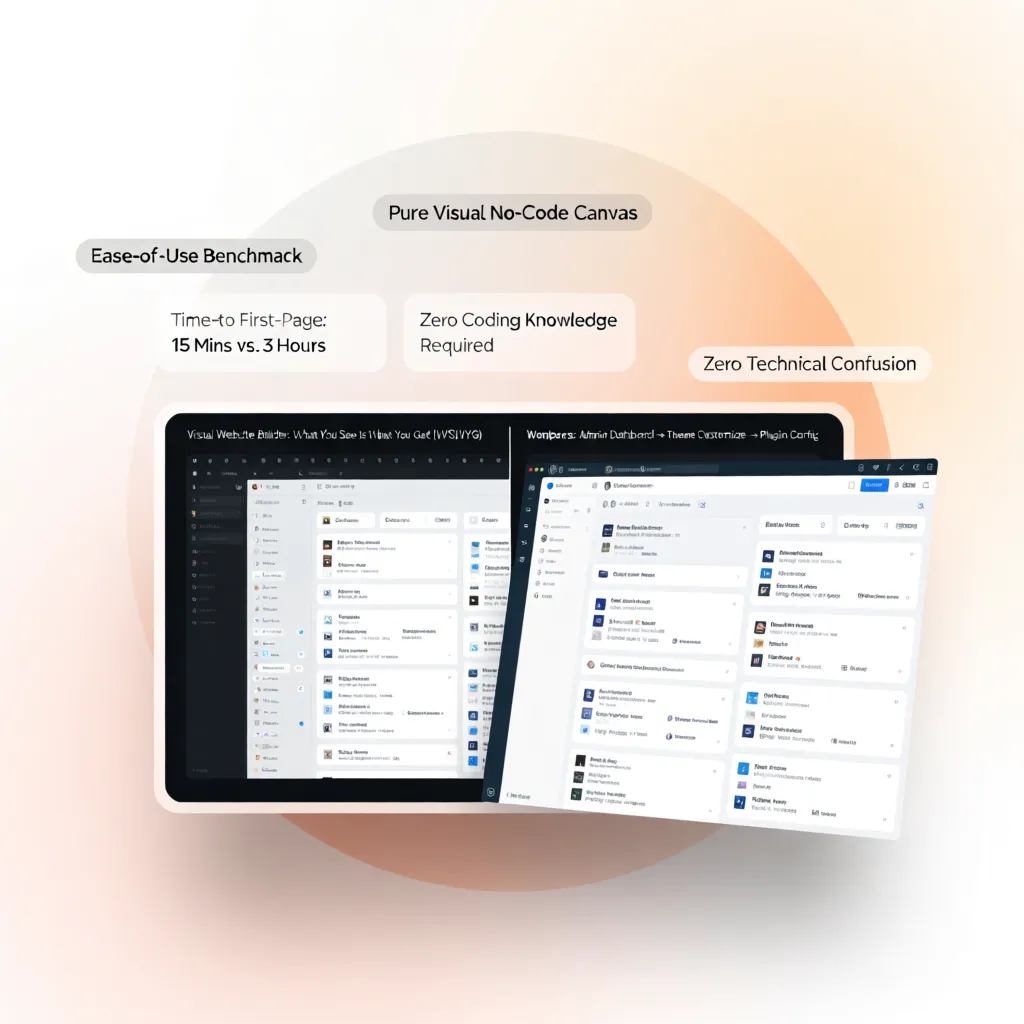
- • Hosted Builder Usability ➔ Prompt-assisted layout generation, visual editing, zero code configuration
- • Self-Hosted Setup Workload ➔ Manual database setup, FTP uploads, plugin configuration, theme tweaking
When evaluating hosted vs self-hosted website ease of use, hosted environments eliminate the technical learning curve.
Instead of configuring database names, editing .htaccess files, or configuring SMTP mail servers, platforms like BoltWeb handle backend connections automatically—allowing you to publish a lead-ready website in minutes.
6. Hosted vs Self-Hosted Website Security: Who Is Responsible?
Cyberattacks, malware injections, and brute-force login attempts target small business websites every single day.
When assessing hosted vs self-hosted security, responsibility rests on different shoulders:
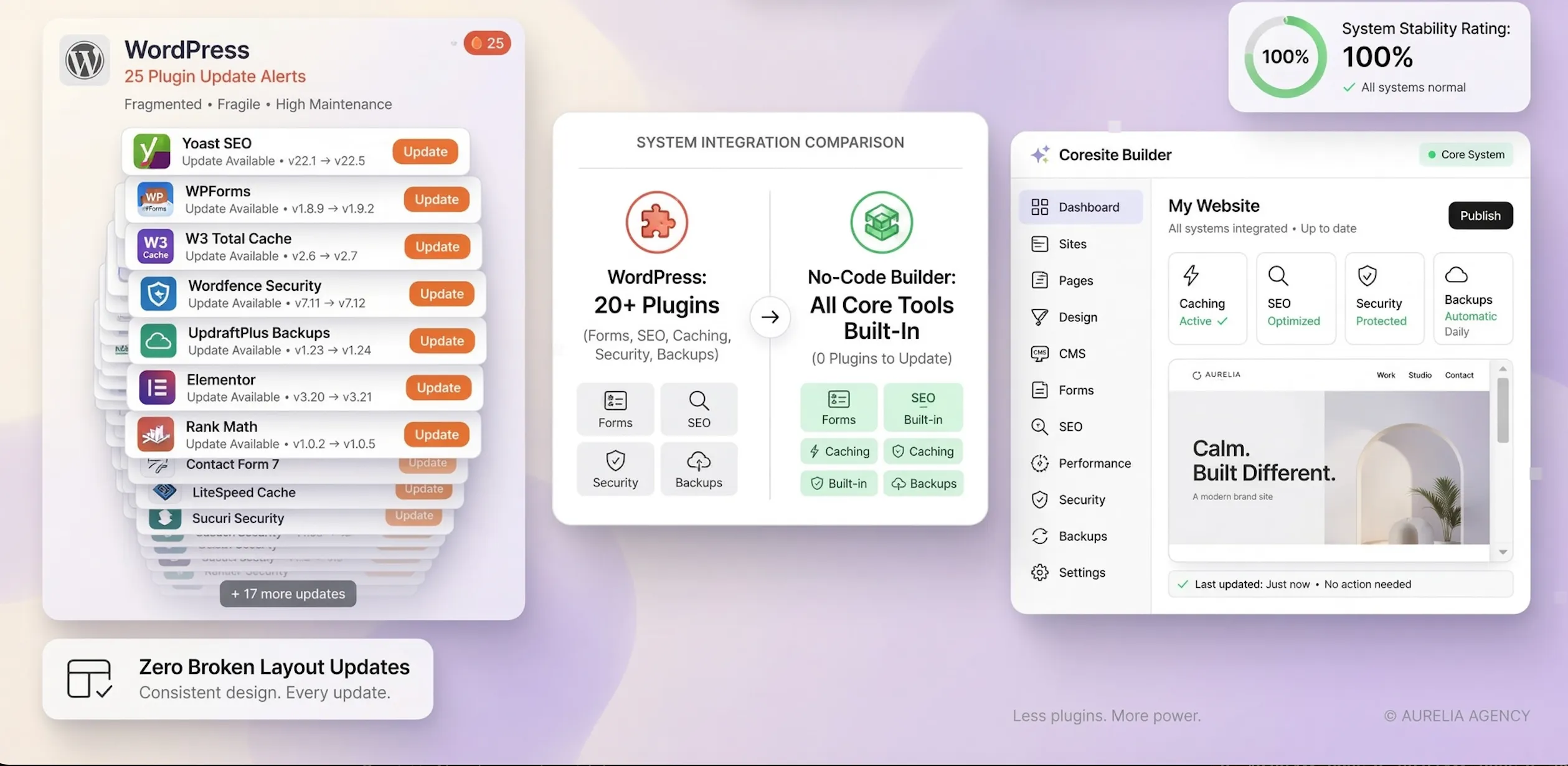
- Self-Hosted Vulnerability: Open-source systems rely on dozens of third-party plugins. If a single plugin developer delays a patch, hackers can exploit the vulnerability, inject malicious redirects, or compromise customer data. You are responsible for malware removal and database restoration.
- Hosted Platform Security: Enterprise security engineers defend the core network. Firewalls, DDoS protection, automated SSL encryption, and isolated database storage are managed continuously at the infrastructure level.
Delegating infrastructure defense to dedicated security engineers removes a major operational risk for small business owners.
7. Which Setup Gives You More SEO and Performance Control?
A common myth claims that self-hosting automatically guarantees higher search rankings on Google.
Let’s clear the air:
Search engines do not rank websites based on whether files live on a private server or a hosted platform. Google ranks pages based on content quality, mobile performance, structural metadata, user experience, and local authority signals.
- • Technical SEO ➔ Clean H1/H2 tags, schema markup, XML sitemaps
- • Speed Metrics ➔ Global Content Delivery Network (CDN) & fast caching
- • Mobile Experience ➔ Fully responsive layouts & touch-friendly UI
Evaluating hosted vs self-hosted SEO capabilities shows that managed platforms offer a built-in advantage: cloud infrastructure, edge-cached delivery, and automatic schema generation give search crawlers clean, fast-loading code right out of the box.
8. What Happens When Your Website Outgrows Its Current Setup?
Every ambitious founder worries about site crashes when a marketing campaign spikes web traffic.
Consider how scaling works across both environments:
- Scaling a Self-Hosted Site: When web traffic surges, a basic shared server can run out of memory, returning generic server errors to prospective clients. Upgrading requires migrating to expensive virtual private servers (VPS), configuring cloud load balancers, and optimizing database indexes manually.
- Scaling a Hosted Platform: Managed cloud networks distribute server load dynamically across global infrastructure. Whether you receive 50 visitors or 50,000 visitors a day, the platform scales bandwidth and processing capacity automatically without downtime.
Choosing a scalable, managed platform ensures your site remains responsive during traffic surges without requiring complex server reconfigurations.

9. Do You Actually Own Your Website and Its Content?
Data ownership is a critical consideration for business owners planning for long-term growth.
Understanding ownership dynamics prevents future lock-in surprises:
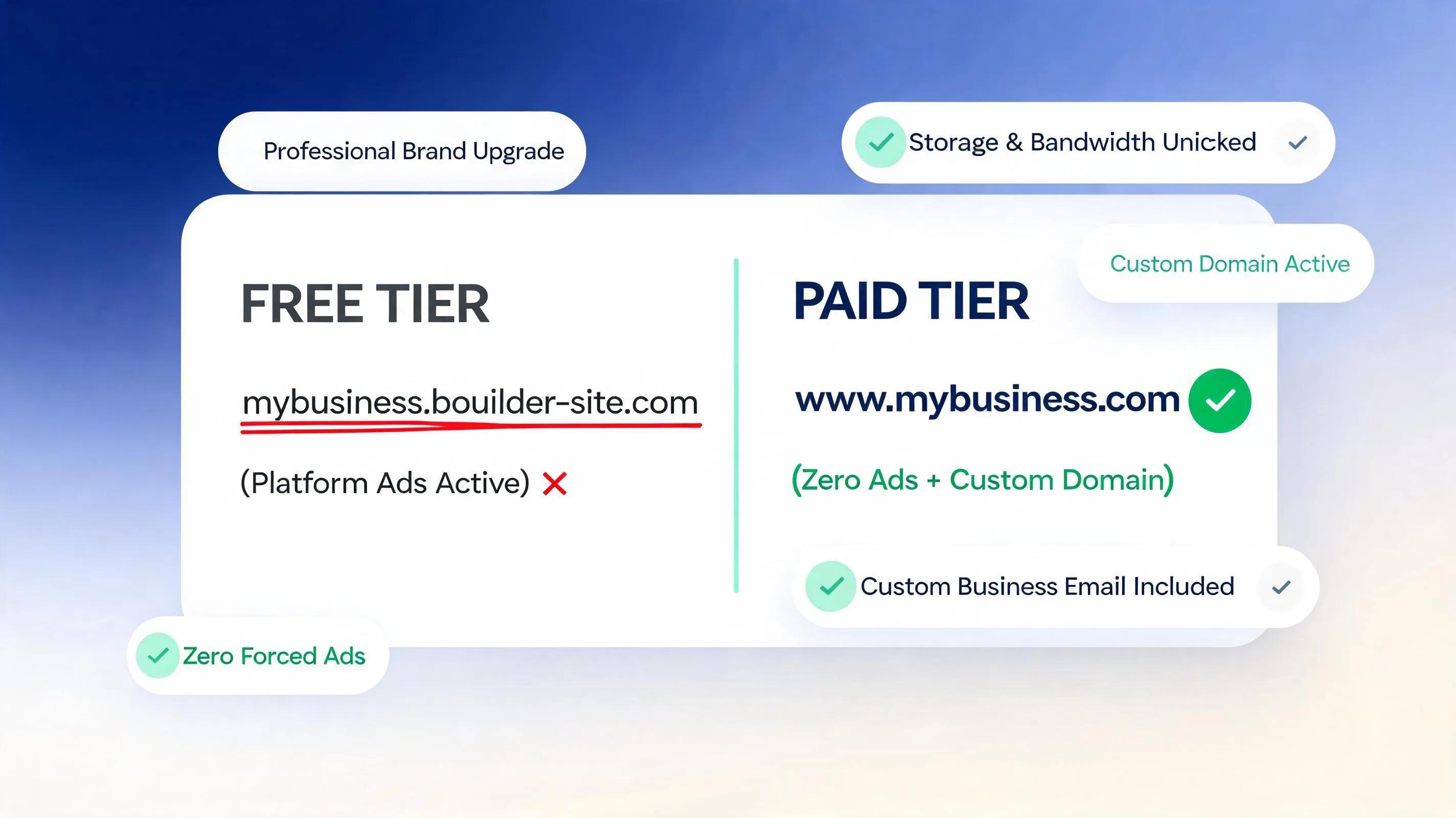
- Domain Name Ownership: Regardless of platform, your custom web domain name remains 100% your legal property as long as you maintain your registrar account.
- Content & Brand Assets: Your copy, images, logo files, customer reviews, and product data belong strictly to you.
- Platform Infrastructure: Hosted platforms own their proprietary layout code and rendering engine, while self-hosted open-source software provides transferable source files.
If you ever decide to transition platform setups in the future, your core content and domain authority can be exported cleanly to support your new digital storefront.

10. When a Hosted Website Is the Better Choice
For most local business owners, a managed, hosted platform provides the fastest path to online profitability.
- • Roofers, Painters, Mechanics
- • Urgent Mobile Tap-to-Call
- • Fast Lead Form Capture
- • Salons, Clinics, Agencies
- • Online Appointment Booking
- • Clean Portfolio Displays
A hosted solution like BoltWeb is the ideal choice when you want to:
- Launch a professional website in under an hour without writing code or hiring developers.
- Eliminate technical maintenance, server administration, and security patches.
- Ensure fast mobile load times using built-in global CDN networks.
- Access integrated lead capture forms, local SEO tools, and custom design controls out of the box.
11. When a Self-Hosted Website Is Worth the Extra Responsibility
While managed platforms cover standard commercial needs, specific business models require a self-hosted architecture.
Self-hosting is worth the additional management responsibility if you are:
- Building a complex web application with custom user roles, membership databases, and server-side scripts.
- Operating a massive e-commerce portal with tens of thousands of complex product SKUs requiring custom database queries.
- Managing an in-house development team that demands root server access, custom database pipelines, and total software control.
For businesses requiring custom web applications, investing in a dedicated development team and self-hosted server infrastructure makes sense.
12. Consider the Middle Ground: Self-Hosted Software With Managed Hosting
For business owners who specifically require open-source software like WordPress but want to avoid manual server administration, a middle option exists.
Using managed WordPress hosting provides a middle ground:
- How It Works: You use open-source software, but pay a specialized hosting provider to handle server setup, daily database backups, core updates, and server security.
- The Trade-off: While managed hosting vs self-hosting reduces server maintenance overhead, you still need to manage third-party plugin updates, theme compatibility, and visual layout design yourself.
13. Use This Checklist to Choose the Right Website Setup
Run through this quick decision matrix to select the hosting architecture that aligns with your technical comfort level, operational budget, and business goals:
- [ ] I want to go live fast without managing servers or code updates.
- [ ] I prefer predictable pricing with hosting and security included.
- [ ] My primary goal is capturing local leads through phone calls & forms.
- [ ] I want mobile-responsive designs with built-in local SEO tags.
Result: If you checked two or more boxes above, an all-in-one hosted platform like BoltWeb is the most efficient, cost-effective choice for your business.
To review official technical standards and digital guidelines, inspect web accessibility specifications via the W3C Web Accessibility Initiative, review search indexing documentation at Google Search Central, or analyze digital privacy best practices on the Federal Trade Commission (FTC). Additional guidance on mobile user experience can be explored at the Nielsen Norman Group.
Stop wasting hours managing server updates, database errors, and complex plugins. Build your high-converting digital storefront with BoltWeb today and start generating local leads immediately.
Hosted vs Self-Hosted Website: FAQs for Business Owners
1. What is the actual difference between a hosted vs self-hosted website?
Here’s the plain truth:
A hosted website combines your website software, cloud server space, security firewalls, and database storage into one seamless, managed service. You pay a single subscription fee, and platforms like BoltWeb handle the technical infrastructure behind the scenes. On the flip side, a self-hosted website forces you to download open-source software, buy separate third-party server hosting, manage database setups, and troubleshoot software errors yourself.
2. Who is responsible for managing updates, security, and bugs on my site?
Think about how you want to spend your workdays:
When you choose a hosted platform, dedicated cloud engineers manage server security, perform core updates, renew SSL certificates, and protect against malware automatically. With a self-hosted site, that system administrator job falls squarely on your shoulders. You have to monitor server uptime, update third-party plugins, patch software vulnerabilities, and fix broken code whenever a database error crashes your pages.
3. Is a self-hosted website really cheaper than a managed hosted platform?
Looking only at baseline hosting fees creates a dangerous financial illusion.
A $4-a-month self-hosted deal sounds cheap until you add up necessary operational expenses: paid security firewalls, premium form builders, backup add-ons, caching tools, and emergency developer fees when something breaks. When calculating hosted vs self-hosted website cost, a managed hosted platform bundles enterprise cloud hosting, SSL encryption, and lead intake tools into one flat, predictable fee that protects your operating margins.
4. Do I need root server access and full technical control to run a business website?
Ask yourself what your business actually needs to make money online:
Unless you are building a custom SaaS software app, a proprietary user portal, or an enterprise marketplace with thousands of complex database queries, server-level access is an unnecessary liability. For local service companies, retail shops, and professional practices, visual design control, fast mobile page speeds, location-targeted SEO tags, and reliable lead capture forms are what actually drive local revenue.
5. Which option is easier to build and maintain if I don't know how to code?
If you don't write software code for a living, usability dictates how fast your site goes live.
Evaluating hosted vs self-hosted website ease of use shows a massive contrast:
- Self-Hosted Setup: Requires manual database creation, FTP file transfers, DNS record mapping, and troubleshooting plugin conflicts.
- Hosted Platform Simplicity: Uses intuitive visual editing and automated AI tools to build a responsive, lead-ready storefront in minutes without touching a single line of code.
6. Who protects my website if a hacker attacks or malware infects my pages?
Cyberattacks and brute-force login attempts target small business websites every single day.
When comparing hosted vs self-hosted security, responsibility rests on completely different shoulders. On a self-hosted site, if a third-party plugin vulnerability lets malware infect your database, you have to clean the compromised files and restore backups yourself. On a hosted platform like BoltWeb, enterprise security systems and firewalls defend your network continuously at the infrastructure level.
7. Will a self-hosted website rank higher on Google than a hosted platform?
Let’s clear the air on a common search engine myth:
Google's search algorithm does not care whether your files live on a private server or a hosted platform. Search engines rank pages based on content quality, fast loading speeds, mobile responsiveness, structured schema tags, and local search signals. Choosing a managed hosted platform gives you an edge by delivering edge-cached performance and clean metadata right out of the box.
8. What happens when my website experiences a sudden surge in traffic?
Every ambitious business owner dreams of viral marketing campaigns that bring thousands of prospective clients to their site.
Here is what happens behind the scenes: a basic self-hosted server can run out of memory during a traffic spike, displaying ugly database errors to prospective clients. Managed hosted cloud networks distribute traffic dynamically across global infrastructure, ensuring your site stays fast and responsive whether you get 50 or 50,000 visitors a day.
9. Do I actually own my website content and domain name on a hosted platform?
Yes, absolutely.
Your custom domain name, brand logo, service copy, high-resolution project images, and customer reviews belong 100% to your business. If your enterprise expands to require custom web software years down the road, you can easily export your content, transfer your custom web domain, and deploy your assets onto new infrastructure without losing your brand equity or local search authority.
10. When is a managed hosted website the smarter choice for my business?
A managed hosted platform is the ideal choice when you want to:
- [ ] Deploy a professional, search-optimized storefront in minutes without writing code.
- [ ] Eliminate server administration, manual database updates, and security patches.
- [ ] Capture local client leads through built-in phone buttons and short quote intake forms.
- [ ] Keep your ongoing web infrastructure costs transparent and predictable.
11. When is taking on a self-hosted website worth the extra work?
Self-hosting is worth the technical responsibility if your business model demands total backend software control. If you operate an in-house development team building proprietary web applications, managing multi-tier membership databases, or integrating complex server scripts, taking full control of self-hosted website hosting makes sense for your technical requirements.
12. How do I get started with a hosted website platform today?
You don't need to spend weeks struggling with server configurations or hiring expensive web developers.
By building your storefront on BoltWeb, intelligent built-in tools construct your site structure, write tailored trade copy, configure local SEO tags, and set up thumb-friendly mobile forms in minutes. Simply review your details, connect your custom web domain, and start capturing high-value local leads today.