When you decide to build a digital presence, the technical choices can feel overwhelming almost immediately. The debate usually narrows down to a single major crossroads: Should you hire developers for custom code, or use a modern AI website builder?
It is easy to assume that spending $10,000+ on hand-crafted code will automatically yield a better result. Here is the truth: writing code from scratch doesn't guarantee more leads, better search rankings, or higher sales. In fact, over-engineering a standard company page often creates unnecessary technical friction, inflates maintenance costs, and delays your launch by months.
Choosing between an AI website builder vs custom development isn't about deciding which technology sounds more sophisticated. It comes down to defining the actual job your site needs to perform, evaluating your timeline, and deciding how much ongoing technical maintenance you want to handle yourself.
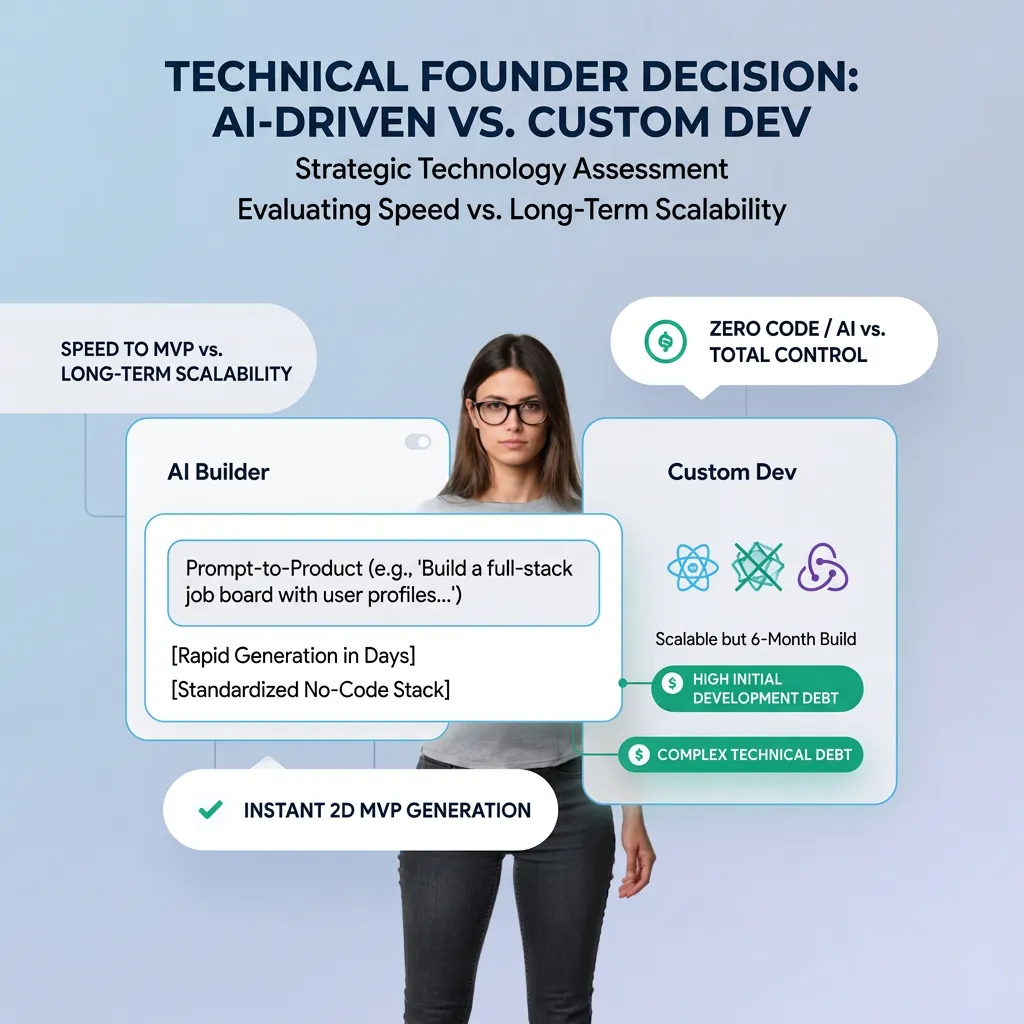
1. AI Website Builder vs Custom Development: Start With What Your Website Actually Needs to Do
Before looking at software specs, agency proposals, or platform feature lists, take a step back. What is the primary job of your site?
Is it to collect client inquiries, book calls, and display your service packages? Or is it to process complex financial transactions, run proprietary software algorithms, and manage unique user portals?
If your business needs a modern marketing engine, choosing a website builder vs custom development route saves you time and capital. An AI platform handles page layouts, copy structure, and mobile responsiveness out of the box. You get to focus entirely on your value proposition rather than wrestling with backend architecture.
2. A Website Can Be Custom Without Being Built From Scratch
There is a common misconception that using a platform means accepting a generic, cookie-cutter look. People confuse custom development (writing raw HTML, CSS, and backend code) with customization (tailoring brand assets, layouts, copy, and visual identity).
Think of it like buying a physical office space:
An AI website builder creates a custom-tailored foundation in seconds based on your business inputs. From there, you use a visual editor to modify brand colors, adjust typography, swap photos, and reorder sections. You receive a unique, fully branded custom website without suffering through a six-month software engineering cycle.
For a deeper dive into how automated engines handle visual layout structures, explore our analysis on AI website creator systems.
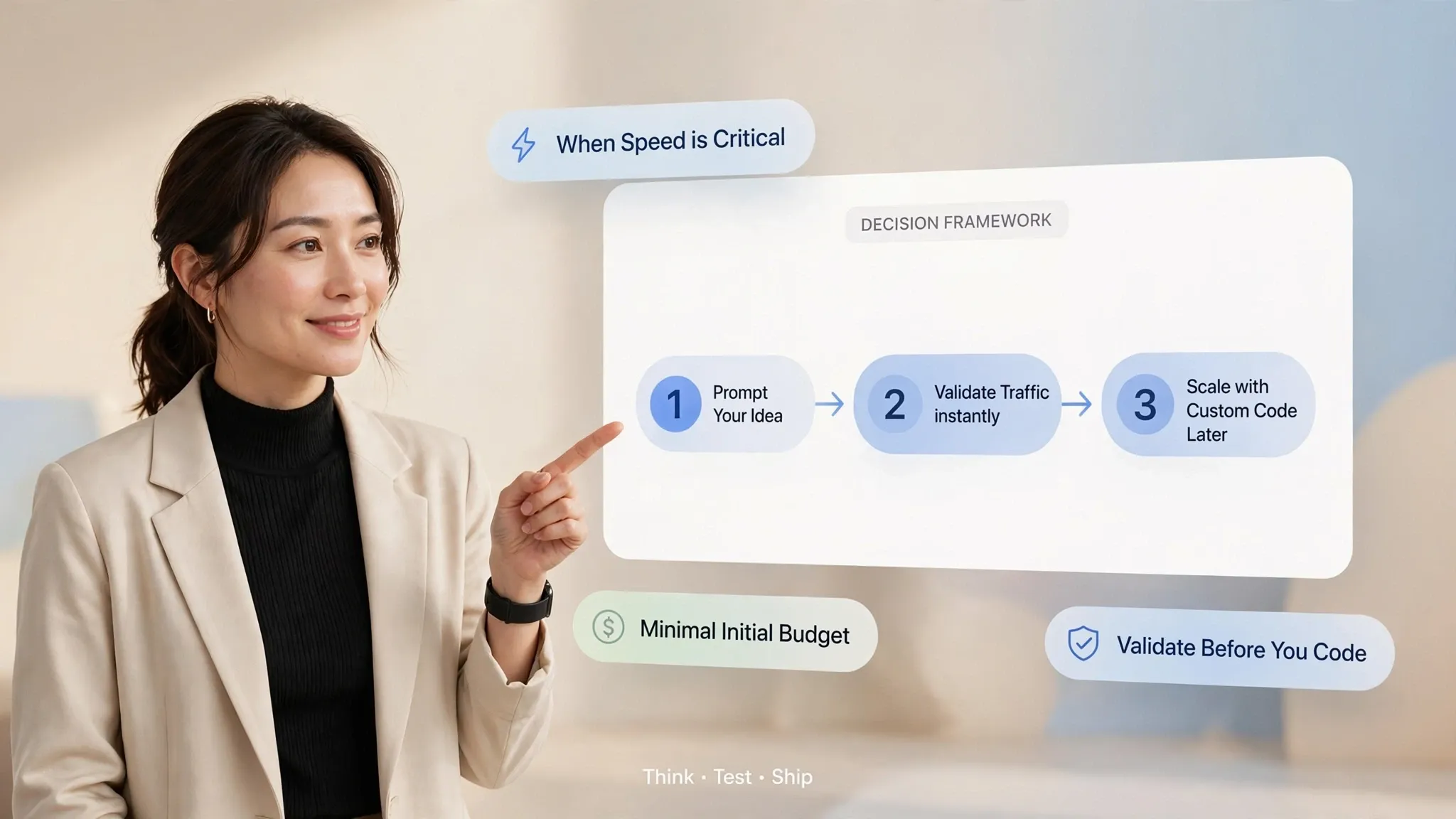
3. Start With the Features You Can't Afford to Compromise On
To avoid scope creep and bloated budgets, separate your non-negotiable business requirements from optional visual polish. Let's break down where common features land:
| Project Requirement | Standard Platform Friendly | Requires Custom Web Development |
|---|---|---|
| Contact & Lead Forms | Yes (Built-in) | No |
| Service Pages & Portfolios | Yes (Automated) | No |
| Standard E-Commerce Stores | Yes (Integrations) | No |
| Custom SaaS Software Portals | No | Yes (Required) |
| Proprietary Banking API Tools | No | Yes (Required) |
| Complex Real-Time Analytics | No | Yes (Required) |
If your primary website requirements revolve around showcasing your brand, collecting lead forms, and publishing content, an AI website development workflow gives you 100% of what you need without coding overhead.
4. If the Website Is Mostly Content, Services, Leads, or Sales, the Build Problem Changes
"I'm not trying to build the next social network. I just need a great website for my business."
The vast majority of online assets share a clear, proven functional blueprint. They exist to answer visitor questions, establish brand credibility, and trigger direct actions. Consider the typical structure of high-converting business sites:
- Service Businesses: Hero section, core value proposition, list of services, client reviews, contact booking form.
- Consultants & Agencies: Problem overview, case studies, founder bio, strategic offer, scheduling calendar.
- Local Businesses: Location details, business hours, customer testimonials, service menu, phone link.
When your primary goal is turning traffic into paying clients, building a small business website or lead generation website using an AI platform is the most direct path to launch. You can review our step-by-step walkthrough on how to build a website to see how quickly these structures come together.
5. Custom Development Starts Making Sense When the Website Behaves More Like Software
There is a clear line where an automated platform ends and custom web development becomes necessary. That line is reached when your website functions as an interactive software application rather than a marketing and sales channel.
You should consider custom website development if your project demands:
- Proprietary User Databases: Advanced user role permissions, dynamic dashboards, and private social portals.
- Deep System Integrations: Complex, bi-directional API pipelines with legacy enterprise software platforms (e.g., legacy ERPs like SAP or Oracle).
- Unique Algorithmic Tools: Interactive online software calculators or web tools built on custom code logic.
If your project doesn't require these advanced software engineering capabilities, paying for hand-coded development introduces unnecessary cost and risk.
6. Compare How Quickly You Need to Go From Idea to Live Website
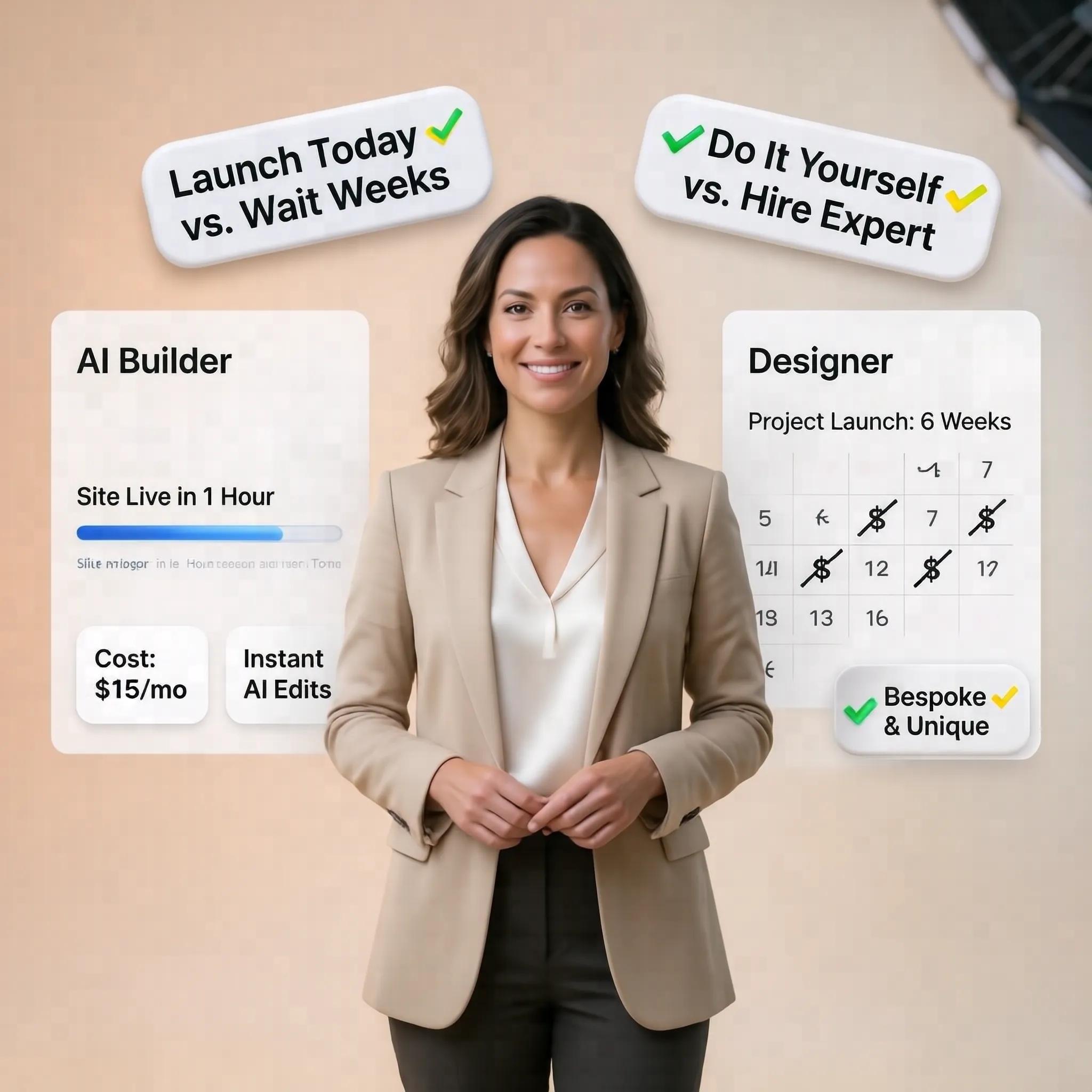
Time-to-market is an often overlooked business metric. Every week your site sits in design revisions or development backlogs is a week you aren't capturing leads or closing deals. Let's look at a side-by-side website development time comparison:
Using an AI website builder vs custom website workflow compresses project delivery down to a single afternoon. If you want to validate a new service offer or launch a marketing campaign immediately, an automated builder is the clear winner.
7. The First Build Is Only Part of What You Will Pay For
When evaluating custom website development cost, focusing only on the initial developer quote is a major mistake. Hand-coded software requires ongoing maintenance, security updates, server monitoring, and developer time for even minor edits.
Here is a realistic look at total ownership expenses: Custom code requires significant capital for initial architecture, along with ongoing retainers for agency engineers, server management, and security maintenance. An AI website builder cost operates on a low, predictable subscription model. Platforms like BoltWeb consolidate hosting, SSL security, responsive page generation, and visual editing tools into one affordable package.
By eliminating developer retainers, you keep overall operational overhead low while retaining access to a professional digital presence.
8. Think About What Happens When You Need to Change the Website
Your website should evolve naturally alongside your business operations. Consider what happens when you need to make everyday updates:
With an AI website builder, you gain complete, immediate control over website maintenance. You don't need to learn code or log support tickets. You simply open your visual dashboard, swap text or images, and hit publish.
If you are weighing the operational differences between automated software and human services, read our guide on AI website builder vs web designer.
9. More Flexibility Also Means More Decisions to Own
Full technical flexibility sounds great in concept, but it comes with real operational responsibilities. When you choose custom development, you become responsible for hosting management, cybersecurity & compliance, and cross-browser optimization.
An automated website development platform handles infrastructure management automatically. You get a secure, fast, and fully responsive layout without acting as your own system administrator.
10. Don't Choose Custom Development Just Because You Want a More Professional Website
There is no inherent visual difference between a well-designed AI-generated layout and a hand-coded webpage. High visual quality isn't created by raw code—it is created by clean typography, balanced spacing, high-resolution imagery, and clear copywriting.
- ✔ They apply proven layout principles automatically.
- ✔ They format mobile layouts instantly for seamless phone browsing.
- ✔ They generate clear, industry-relevant copy that communicates your core value offer.
A clean, fast, content-rich platform page will outperform a slow, over-engineered custom build every time. If you want to optimize your site text for maximum search impact, take a look at our step-by-step walkthrough on how to write SEO-friendly website content.
11. Use These Questions to Find the Right Build Approach
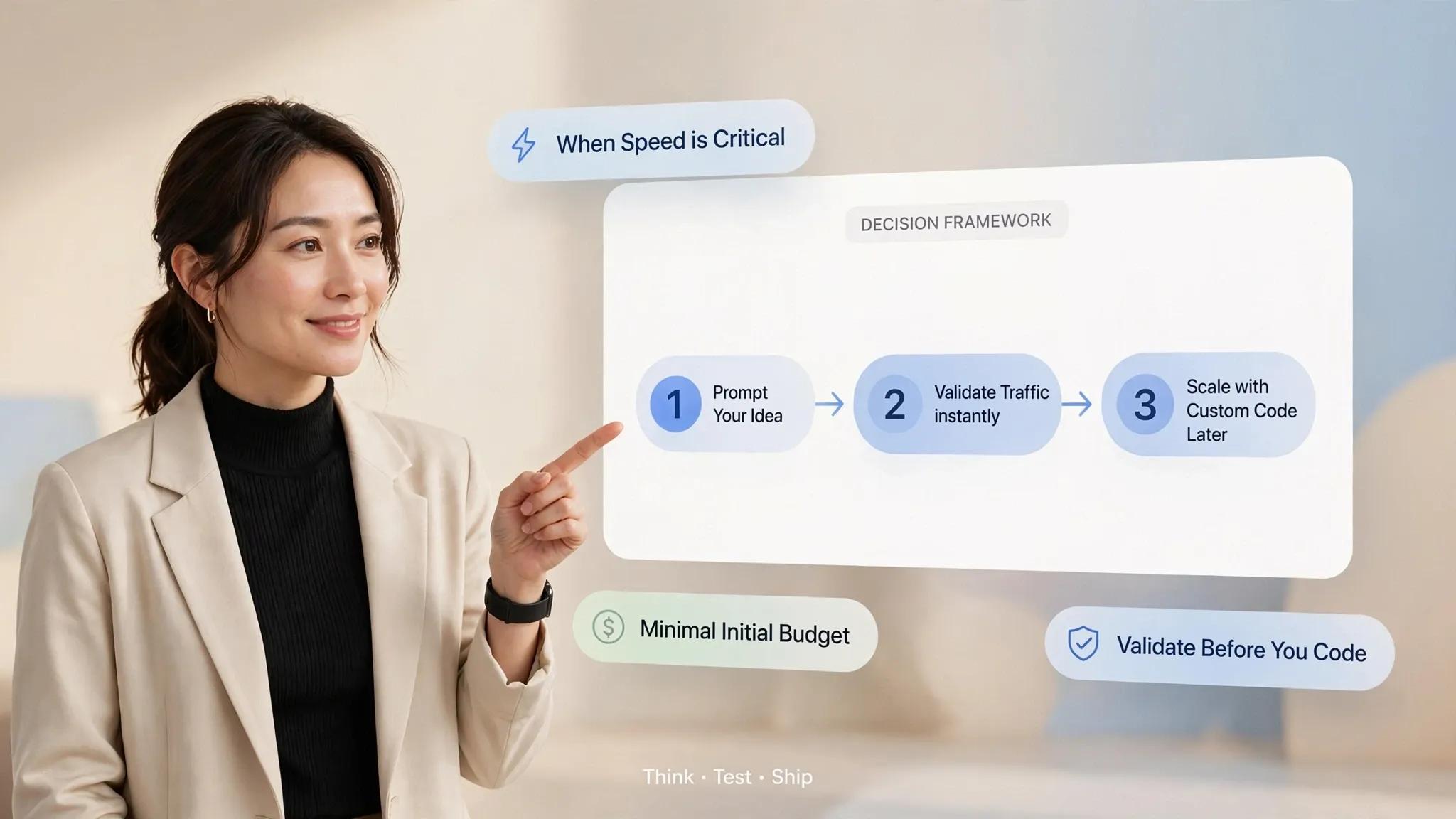
Run through this practical decision framework:
- ✔ Are you creating an online portal, custom SaaS app, or complex database tool? (If yes ──► Choose Custom Development).
- ✔ Do you need a clean marketing site, service showcase, or lead page live this week? (If yes ──► Choose an AI Website Builder).
- ✔ Do you want to avoid paying ongoing software developer retainers? (If yes ──► Choose an AI Website Builder).
- ✔ Do you want automated copywriting assistance for your page text? (If yes ──► Choose an AI Website Builder).
- ✔ Do you want to manage day-to-day text and image updates yourself? (If yes ──► Choose an AI Website Builder).
12. Build the Business Website You Need Without Turning It Into a Development Project
You don't need to spend months managing developers, writing code specifications, or overspending your launch budget. This is where BoltWeb delivers an ideal balance.
BoltWeb provides all the flexibility of a modern marketing framework without the technical friction of custom coding:
- Instant Multi-Page Drafts: Enter your business name and service details, and our AI website creator generates a complete, responsive site with tailored copy, structured forms, and conversion-focused sections in under 60 seconds.
- Complete Visual Control: Fine-tune every section using our intuitive website drag and drop builder. Update copy, swap imagery, or reorder sections instantly with zero technical skills required.
- Comprehensive Growth Infrastructure: Avoid developer traps as your site scales. BoltWeb includes over 20 built-in SEO, analytics, and marketing tools out of the box—allowing you to launch landing pages, publish blogs, and capture search traffic without extra plugins or complex dev setups.
Stop wasting months on complex software development. Build your business site on BoltWeb today and get your business online right now!
Frequently Asked Questions: AI Website Builder vs Custom Development
1. What is the main difference between an AI website builder and custom development?
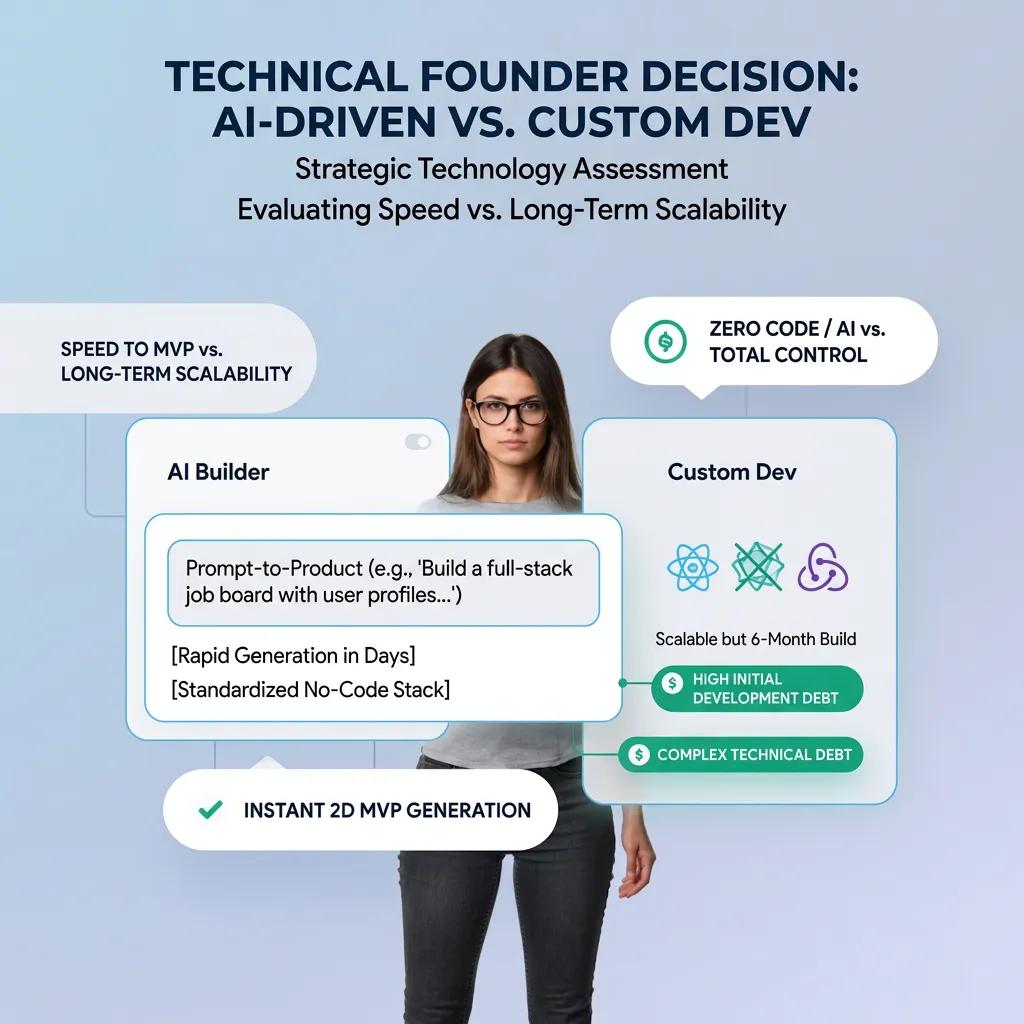
The core distinction comes down to how the underlying software is constructed. An AI website builder leverages artificial intelligence models and pre-engineered design frameworks to generate complete website layouts, color palettes, and copywriting automatically from text prompts. Custom development involves hiring human web developers to write bespoke code line-by-line using custom web frameworks (such as React, Next.js, or Vue) to craft unique backend logic, custom databases, and tailored user interfaces from scratch.
2. How do the initial costs compare between AI builders and custom development?
The upfront investment gap is massive: Custom Development demands significant capital—typically ranging from $5,000 to $50,000+ for initial architecture, along with ongoing retainers for agency engineers, server management, and security maintenance. AI Website Builder operates on a low, predictable subscription model (often $10 to $30 per month). Platforms like BoltWeb consolidate hosting, SSL security, responsive page generation, and visual editing tools into one affordable package.
3. Which option gives me a faster launch time for my business website?
An AI website builder is exponentially faster. Custom software engineering takes weeks or months of discovery calls, wireframing, frontend development, database setup, and QA testing. In contrast, an AI generator creates a complete, mobile-responsive multi-page website draft with pre-written text in under 60 seconds. You can polish the content visually and go live the exact same day.
4. Can an AI website builder handle standard business website features?
Yes, modern AI site builders easily handle standard marketing and operational needs. They excel at creating lead generation forms, service grids, portfolio galleries, client testimonial blocks, booking sections, and simple e-commerce storefronts. An AI platform builds all these standard business layouts out of the box so you don't have to pay developers to build common web elements from scratch.
5. When is custom development strictly necessary over an AI builder?
You should choose custom development when your project requires complex, proprietary software logic rather than a traditional marketing website. This includes building specialized SaaS web applications, real-time data streaming pipelines, multi-vendor marketplaces, or bespoke internal enterprise portals that depend on custom API integrations and legacy database architectures.
6. Will a website generated by AI look unique, or will it feel like a generic template?
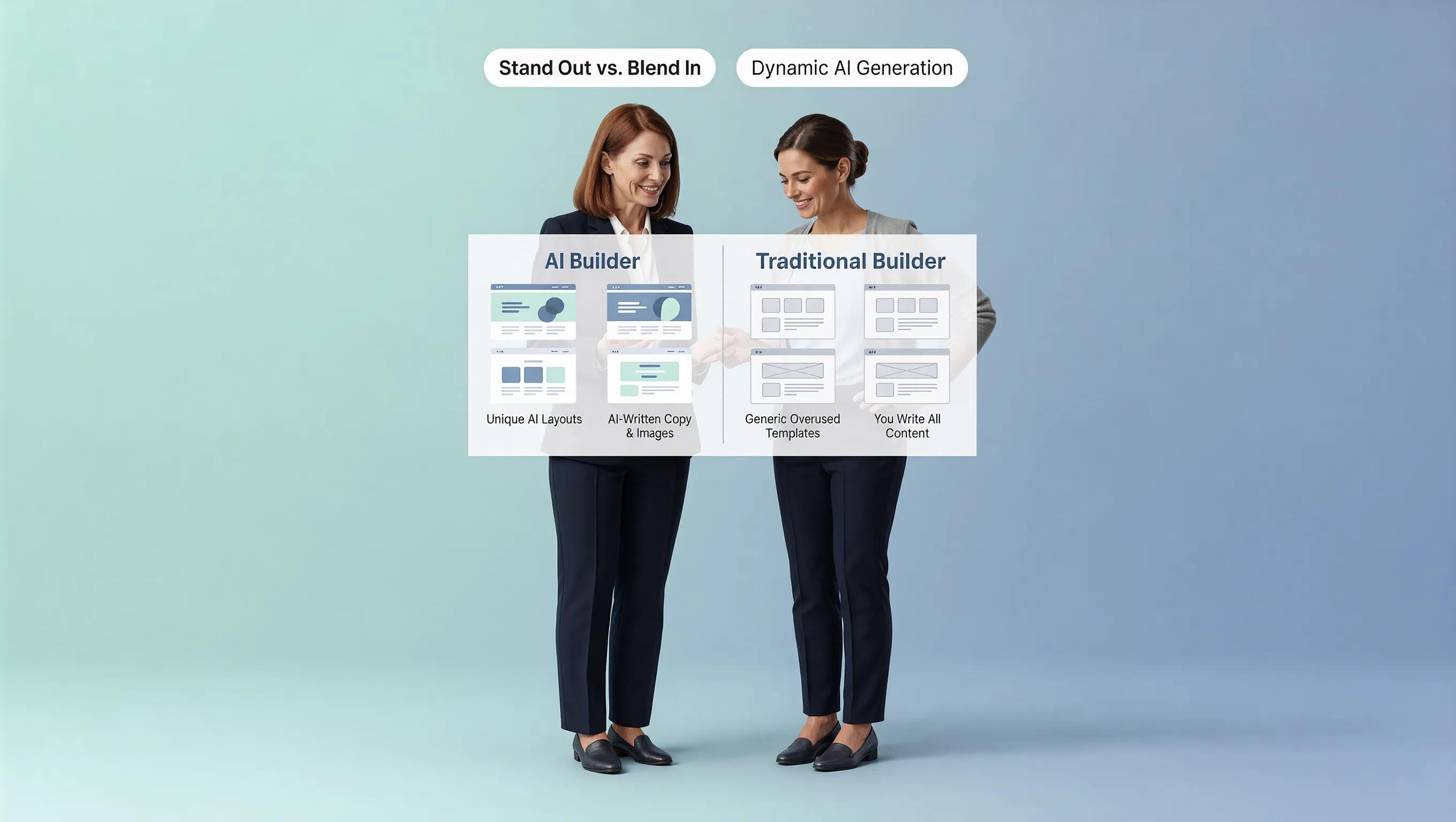
Modern AI tools do not simply apply static templates. They generate custom layouts and contextually relevant copy tailored specifically to your business description. Once the initial draft is generated, you have total visual control through a drag-and-drop editor to change fonts, tweak colors, adjust spacing, and add personalized brand imagery to ensure your brand stands out.
7. Is custom code better for search engine rankings than an AI-built site?
Not automatically. Search engines rank pages based on loading speed, mobile responsiveness, site security, and overall content quality—not who wrote the lines of code. AI website platforms produce lightweight, fast-loading HTML code, automatic mobile layouts, and pre-configured SEO metadata out of the box. Coupled with high-quality copywriting, an AI-built site ranks just as effectively as a custom-coded website.
8. How do maintenance and ongoing updates differ between both options?
With custom development, making simple text edits or publishing new landing pages usually requires logging a support ticket, waiting for developer availability, and paying hourly maintenance fees. With an AI website builder, you log into your dashboard, click directly on any element to edit it, and publish updates live in seconds without paying outside agency fees.