
Are you wondering if it is time to overhaul your online presence, or are you just tired of looking at the same pages?
Here is the bottom line: a website redesign should never be triggered by arbitrary calendar dates or design trends. It should be driven by business metrics, user friction, and revenue goals. When your site fails to rank, drops in performance, or stops converting prospects into paying clients, sitting on an outdated digital foundation directly harms your growth. Ignoring these warning signs gives your competitors an open runway to steal your market share.
Below is a 12-step decision framework designed to help you determine exactly when to redesign a website, fix core architectural problems, and rebuild your digital engine for maximum conversion.

When Should You Redesign Your Website? Start With the Problems, Not the Date
Many business owners fall into the trap of scheduling a redesign simply because two or three years have passed. However, changing your layout without a clear performance goal often wastes time and risks losing hard-won search rankings.
Deciding when should you redesign your website requires evaluating measurable problems rather than visual preferences. When asking when to redesign a website, look for clear signs: falling conversion rates, dropping organic traffic, or a complete mismatch with your current offerings. Focusing on real user friction ensures your website redesign addresses core performance bottlenecks rather than surface-level aesthetics.
Your Website No Longer Represents Your Business
Companies grow, refine their product lines, and shift their target audiences over time. If your company has evolved but your digital footprint remains static, prospective clients will get a confusing, outdated impression of your brand.
Audit your current positioning for alignment gaps:
- Outdated Service Lists: You promote legacy offers while your core revenue drivers are buried or completely unmentioned.
- Mismatched Target Audience: Your design and copy appeal to budget shoppers, even though you have pivoted to high-end enterprise clients.
- Inconsistent Visuals: Your logo, pitch decks, and social media branding have changed, but your site still uses old assets.
Executing a business website redesign aligns your digital presence with your modern offer, making sure your brand strategy matches what you deliver.
Visitors Can't Quickly Understand What You Offer
You have less than five seconds to communicate your value proposition to a new visitor. If your hero section is filled with vague corporate buzzwords, users will leave and click on a competitor's link.
Fix clarity issues across your core conversion paths:
| Messaging Area | Typical Problem | Redesign Fix |
|---|---|---|
| Hero Headline | Abstract, jargon-heavy phrasing | Direct statement naming the target customer, core problem, and precise solution. |
| Call to Action | Unclear buttons ("Learn More", "Submit") | Specific action phrasing ("Get a Quote", "Book a Consultation"). |
| Value Proposition | Wall of uninterrupted body text | Scannable feature lists with bold key metrics and visual callouts. |
Improving website messaging and website usability helps first-time visitors immediately grasp your value and take action.

Your Website Looks Outdated Compared With Your Competitors
Prospects systematically compare your website against top competitors before booking a call or requesting a quote. If rival sites offer smooth animations, modern typography, fast mobile layouts, and instant social proof, an older layout will make your brand look unreliable.
Upgrading to a modern website design goes beyond pure aesthetic appeal:
- It establishes instant brand credibility and industry authority.
- It reassures potential clients that your company is active, modern, and financially sound.
- It eliminates design friction, guiding visitors toward primary conversion points naturally.
Replacing an outdated website design keeps your brand competitive and prevents potential leads from jumping to modern alternatives.
Your Website Is Difficult to Use on Mobile
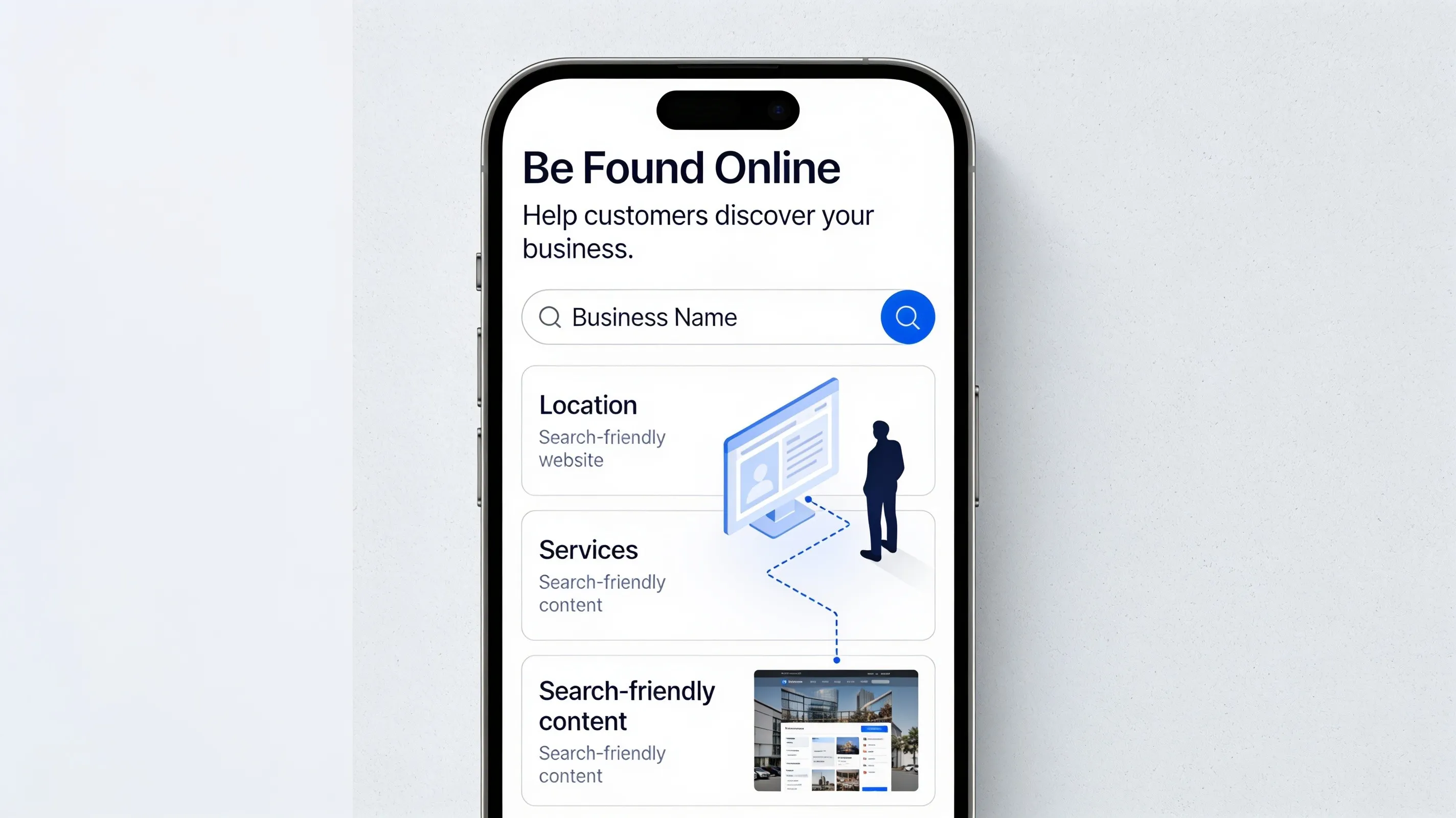
A site that scales down to fit a smartphone screen isn't automatically a fast, usable mobile site. If visitors have to zoom in to read text, hunt for navigation links, or fight with misaligned contact forms, your mobile experience is turning away more than half of your potential traffic.
Key mobile usability requirements include:
- Pinch-and-Zoom Elimination: Text and input forms must render clearly at native mobile resolutions.
- Optimized Touch Targets: Primary navigation links and action buttons must be spaced for effortless thumb navigation.
- Streamlined Page Heights: Mobile pages must prioritize critical information above the fold without endless vertical scrolling.
Prioritizing a responsive website build ensures a seamless, high-converting user experience across every device size.

Visitors Aren't Taking the Actions You Want
If your analytics show steady incoming traffic but almost zero form submissions, phone calls, or product sales, your layout is failing at conversion architecture.
Investigate common conversion bottlenecks:
- Friction-Heavy Lead Capture: Forms requiring too many input fields scare away warm leads.
- Buried Contact Information: Visitors shouldn't have to hunt through footer menus to find a phone number or support email.
- Weak Trust Signals: Missing testimonials, absent client logos, and unverified reviews reduce buyer confidence at the moment of decision.
Building a conversion-focused website removes conversion obstacles, turning existing traffic into predictable business inquiries.

Your Website Has Become Difficult to Update
You shouldn't need a developer or complex code to fix a typo, upload a blog post, or update your pricing page. If your existing content management system is clunky, slow, or constantly throwing syntax errors, your site becomes a bottleneck that holds back your marketing efforts.
The operational costs of a rigid platform include:
- Delayed marketing campaigns caused by slow content updates.
- Unnecessary development expenses for simple text or image changes.
- Infrequent updates that leave your business details looking stale to search engines and prospects.
Migrating to an easy-to-edit website platform lets your team push marketing updates in minutes instead of waiting days for technical support.

Your Website Is Slow, Broken, or Full of Technical Problems
Accumulated technical debt eventually reaches a point where patching individual bugs costs more time and money than building a clean, modern codebase.
Watch for critical technical warnings:
Resolving chronic slow website performance through a full rebuild cleans up legacy code, speeds up load times, and protects your organic search presence.

Your Website No Longer Supports Your Customers' Journey
As your company expands its service lines and target segments, shoehorning new content into an old menu structure creates visual clutter. Visitors shouldn't have to solve a maze to discover your pricing, service terms, or case studies.
A complete UX redesign restructures your digital floor plan:
- Categorizes complex services into logical, scannable submenus.
- Introduces dedicated landing pages tailored to specific buyer personas.
- Provides clear internal navigation links that guide visitors from problem discovery directly to your contact form.
Streamlining your website structure makes it simple for prospective clients to find the answers they need and buy from you.

Your Search Traffic or SEO Strategy Has Outgrown the Old Website
If your current platform lacks clean URL structures, auto-generating sitemaps, structured schema data, or modern canonical tagging, your published content won't rank to its full potential.
An SEO website redesign strengthens your technical search foundation:
- Rebuilds your internal linking structure to pass search authority to key service pages.
- Optimizes underlying HTML markup, heading hierarchies, and asset compressions for faster crawling.
- Supports scalable blog structures and content hubs designed to dominate high-intent keywords.
A search-optimized website SEO foundation guarantees that your ongoing content efforts generate sustainable, compounding organic traffic.

Know When to Improve Your Existing Website Instead of Redesigning It
Before committing to a full rebuild, determine whether your website needs a total architectural replacement or just targeted page updates.
Choose a targeted update when: Your underlying technical platform is fast and easy to edit, but a few specific pages need updated copy, fresh imagery, or minor layout adjustments.
Choose a complete website redesign when: Your current platform is slow, hard to maintain, poorly structured for mobile, or failing to rank and convert visitors despite your ongoing marketing efforts.
Differentiating between a simple website refresh and a full redesign saves time, protects your budget, and targets your resources where they matter most. Reviewing core technical metrics helps make this decision clear.

Redesign Your Website When the Old One Is Holding Your Business Back
Now that we have covered all the core indicators, you can take action with complete clarity. When your site isn't ranking, underperforms on mobile, or fails to convert, ignoring a redesign is a costly mistake. Rebuilding your digital architecture is completely worth it when your current setup is holding back your revenue growth.
Historically, replacing an outdated site meant dealing with development delays, expensive agency quotes, and endless technical headaches. Today, artificial intelligence platforms eliminate that friction entirely, letting you deploy a modern, search-optimized site without starting from scratch.
Rebuild Effortlessly with BoltWeb
BoltWeb is a high-performance business website builder and small business website builder engineered to remove technical friction, letting you redesign, launch, and scale your digital presence with total confidence.
Why Growing Businesses Choose BoltWeb for Their Website Redesign:
Eliminate Redesign Friction
Rebuilding an underperforming site no longer requires writing complex code or wrestling with brittle templates. BoltWeb's autonomous AI engine generates rank-ready page structures, modern UI/UX layouts, and optimized copy in minutes.
Instant Dashboard Updates
When your site isn't performing as expected or your offerings change, simply log into your BoltWeb dashboard, adjust your site details, and publish updates instantly with a single click.
AI-Assisted SEO & Content Engine
Scale your organic traffic faster with integrated AI writing tools that let you research, draft, and publish rank-ready blog posts quickly—helping you target commercial keywords and secure industry backlinks effortlessly.
Built-In Commercial Tools
Connect custom domains, capture client leads, and process transactions directly using native integrations for Stripe, PayPal, and Paddle.

FAQs: When Should You Redesign Your Website?
How do I know if it's actually time to redesign my website or if I just need a few minor updates?
Make targeted updates if your platform is fast, mobile-responsive, and easy to edit, but needs updated service pricing, new copy, or swapped imagery. Execute a full redesign if your underlying code is slow, your mobile layout breaks, or your site fails to generate leads despite steady traffic.
Should I redesign my website on a fixed schedule, like every 2 or 3 years?
A website should be redesigned when business goals shift, organic search performance drops, user experience bottlenecks arise, or your current platform can no longer support your marketing stack. Redesigning solely due to elapsed time risks disrupting working SEO foundations without clear ROI.
How can I tell if my website's conversion rate is low enough to justify a redesign?
If your analytics show steady incoming traffic but your conversion rate sits below industry benchmarks (typically 1%–3%), your site structure is failing. A conversion-focused redesign addresses buried contact forms, unclear headlines above the fold, missing social proof, and high friction in user conversion paths. Implementing strong trust signals is critical here.
Will a website redesign ruin my current Google search rankings and traffic?
A redesign will not destroy your rankings if you execute a strict technical SEO migration. Retain high-performing page URL paths whenever possible. If URL structures must change, map 1:1 301 permanent redirects from old URLs to new page locations, preserve existing high-ranking page title metadata, and maintain your primary domain authority.
How do I know if my website's mobile experience is bad enough to warrant a redesign?
Test your site across multiple physical smartphone resolutions. If users have to zoom in to read body text, fight with overlapping buttons, or contend with unformatted forms, a mobile-first redesign is urgent. Over 60% of web traffic is mobile, and Google enforces mobile-first indexing—meaning bad mobile UX directly depresses your overall search rank. Follow mobile page speed optimization guidelines to secure your rankings.
How does a website redesign help if my business offers new services or has changed its target audience?
When your business model outgrows your original positioning, a redesign aligns your visual identity and messaging with your modern offer. Rebuilding allows you to restructure primary navigation menus, present clear value propositions for new customer segments, and update case studies to attract higher-value prospective clients.
What are the signs that my website's technical debt is too high to keep patching?
Rebuild when patch maintenance costs more time and money than starting fresh. Key indicators of severe technical debt include PageSpeed Insights scores consistently below 50/100, frequent database or plugin conflicts, broken responsiveness across newer browsers, and an inability to implement basic schema or tracking scripts.
How do I know if my competitors' websites are making mine look outdated?
If rival sites load instantly, present clear outcome-driven value propositions, feature modern typography, and provide seamless online scheduling or live chat while your site looks like a static PDF brochure, a redesign is needed to prevent losing qualified prospects to modern alternatives.
Can a website redesign help me optimize for AI search engines like ChatGPT and Google AI Overviews?
Legacy websites built on messy, unstructured layouts make it hard for AI crawlers to extract clear answers. A modern redesign lets you integrate Generative Engine Optimization (GEO) principles: clean HTML heading hierarchies, dedicated Q&A content blocks, scannable bullet points, and precise schema markup that AI models can easily parse, extract, and cite.
How do I know if my current content management system (CMS) is holding my business back?
If your marketing team cannot publish fresh landing pages, update copy, or launch blog posts without custom code or technical support, your platform is a growth bottleneck. A modern redesign migrates your content footprint to an intuitive, easy-to-edit management system that turns marketing updates into a matter of minutes.
What is the fastest way to redesign an underperforming website without months of development delay?
Bypass traditional, lengthy agency rebuilds by utilizing modern AI-driven platforms engineered for high search visibility and instant conversion deployment. Platforms like BoltWeb allow business owners to describe their offer and instantly generate complete, search-optimized 9 to 16-page websites—complete with clean URL structures, responsive mobile architecture, and seamless single-click dashboard editing. Explore the best website builder for small business needs to rebuild effortlessly.